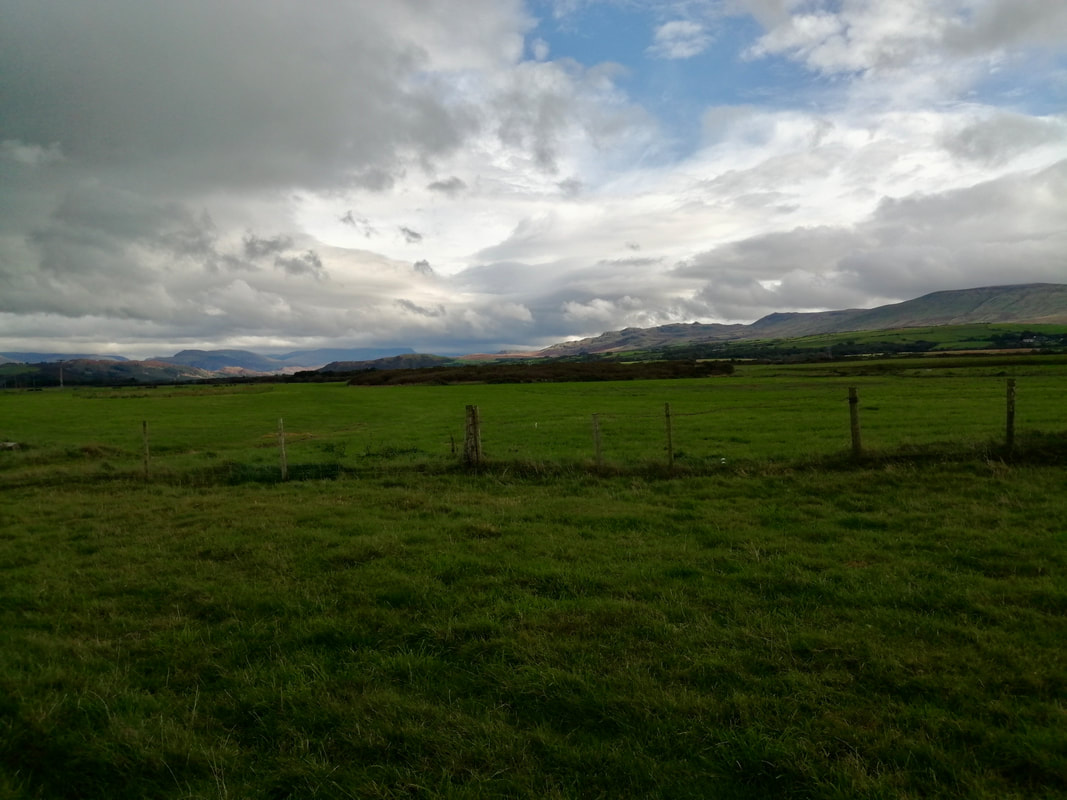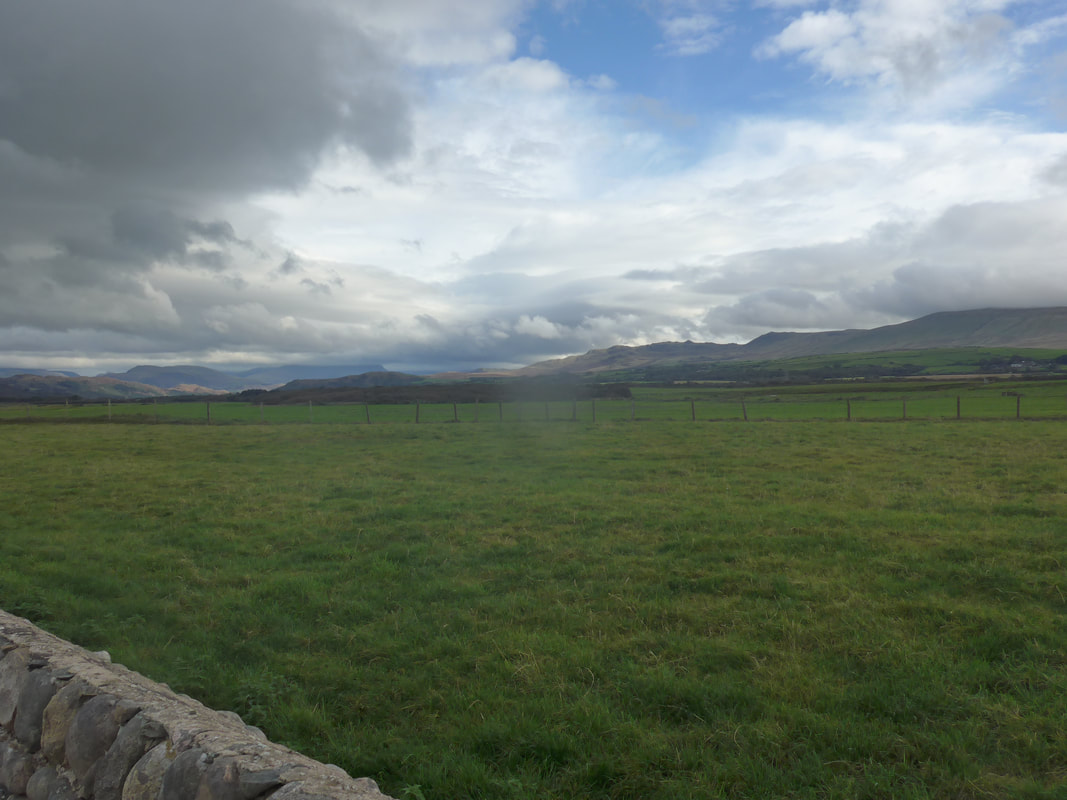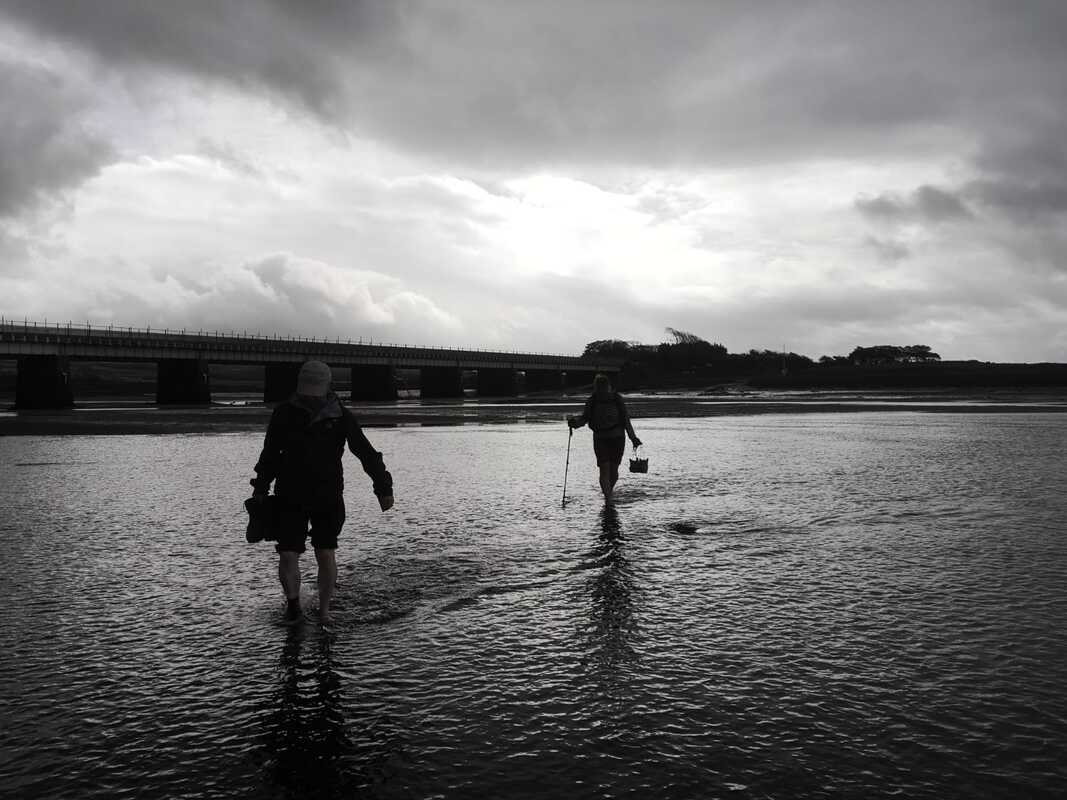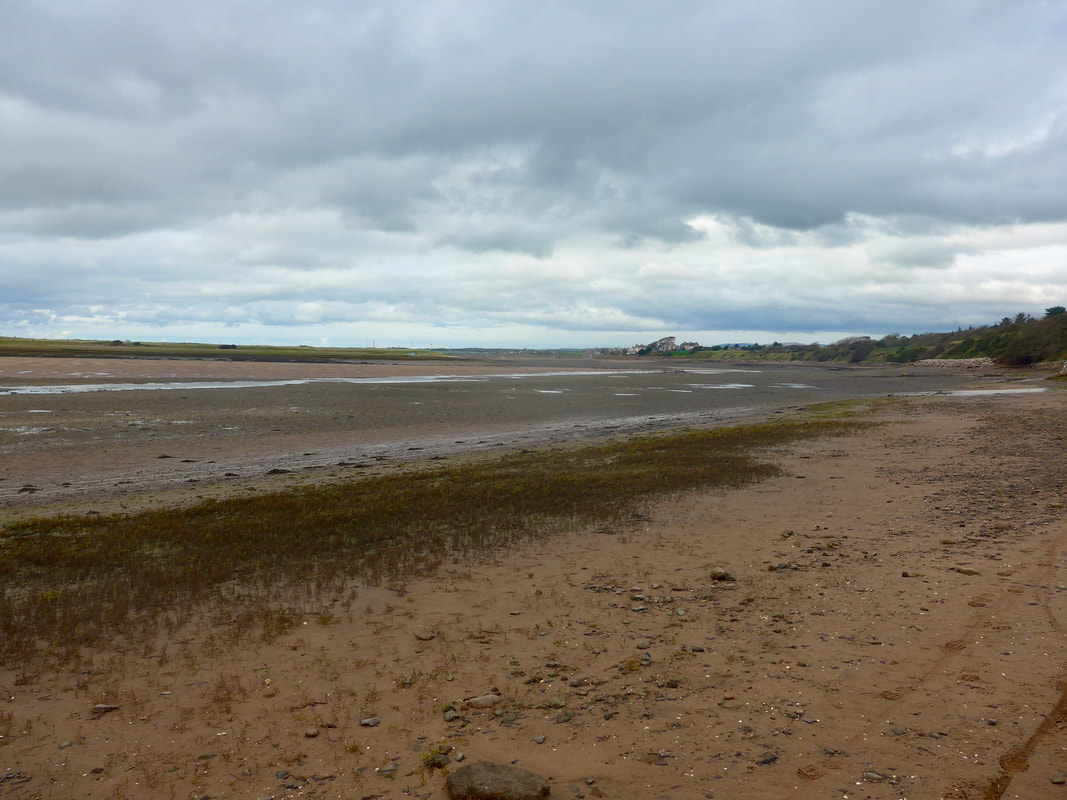
The Scottish Vagabond - Walking the British Coast
  • Welcome
  • The Vagabond
  • Progress
  • Walking Journal
  • Stages of the Walk
    • Scotland >
      • Eastern Scotland
      • Dumfries &Galloway
      • Ayshire & Clyde Valley
      • Argyllshire
      • North West Highlands
      • North Scotland
      • North East Scotland
    • England >
      • North East England
      • Yorkshire, Humberside & Lincolnshire
      • East Anglia & Kent
      • South Coast
      • South West Coast Path
      • North West England
    • Wales >
      • South Wales
      • Pembrokeshire Coast Path
      • West & North Wales
  • Blog
  • Other Walks

Walking the coast of Great Britain

The journey begins

Bootle Station to Seascales         12 Miles

24/9/2020

0 Comments

 
Picture
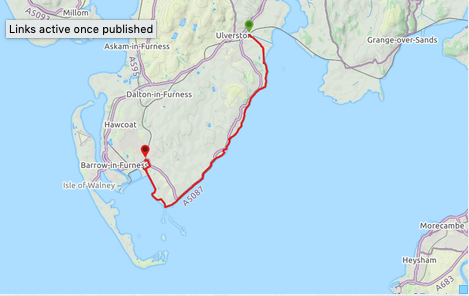
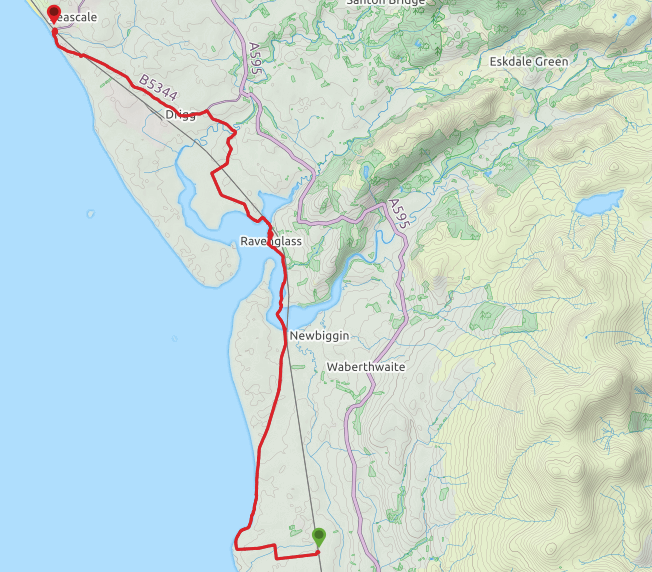
Route Map
Today's walk promised to be challenging in a number of ways. First of all the weather forecast was for rain for most of the day. Secondly, there are two potential river crossings, dependent on the state of the tide. If the tide is against us we will have no option but to take the longer way round and head upriver to the nearest crossing. As well as the river crossings there is a military zone Eskmeal Range) on our route and, if the red flag is flying, which is what we expect, we will have to take the road round the range rather than walk on the beach.

The plan was to take to the coast at Selker Bay for the walk to the military zone and to take the beach or the small road round the base and on to our first river crossing over the River Esk. A short walk up the River Esk to Ravenglass follows where we hope to have a break. Leaving Ravenglass there is a short walk across the marsh, another potential  wade across the River Irt, just after Carleton Hall, before hitting the beach below Drigg for the final section into Seascale.

Walking with my wife and daughter today, we were walking light with only day packs, primarily with the waterproofs, snacks and water.
​
Picture
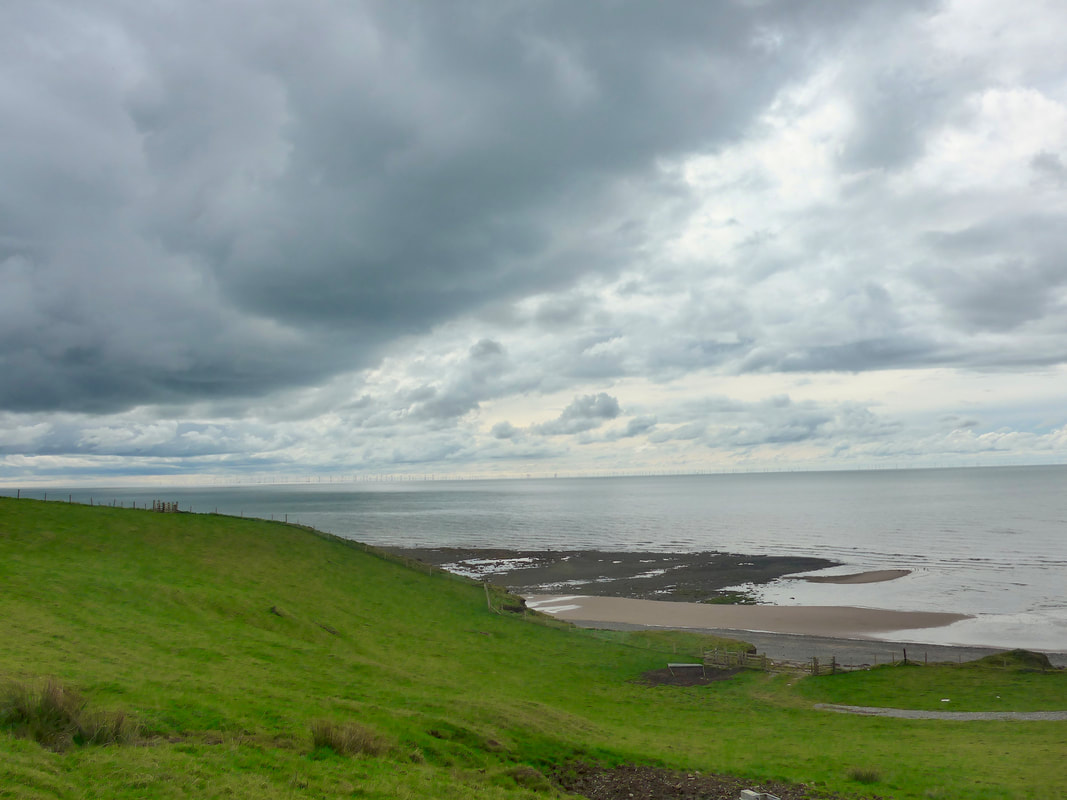
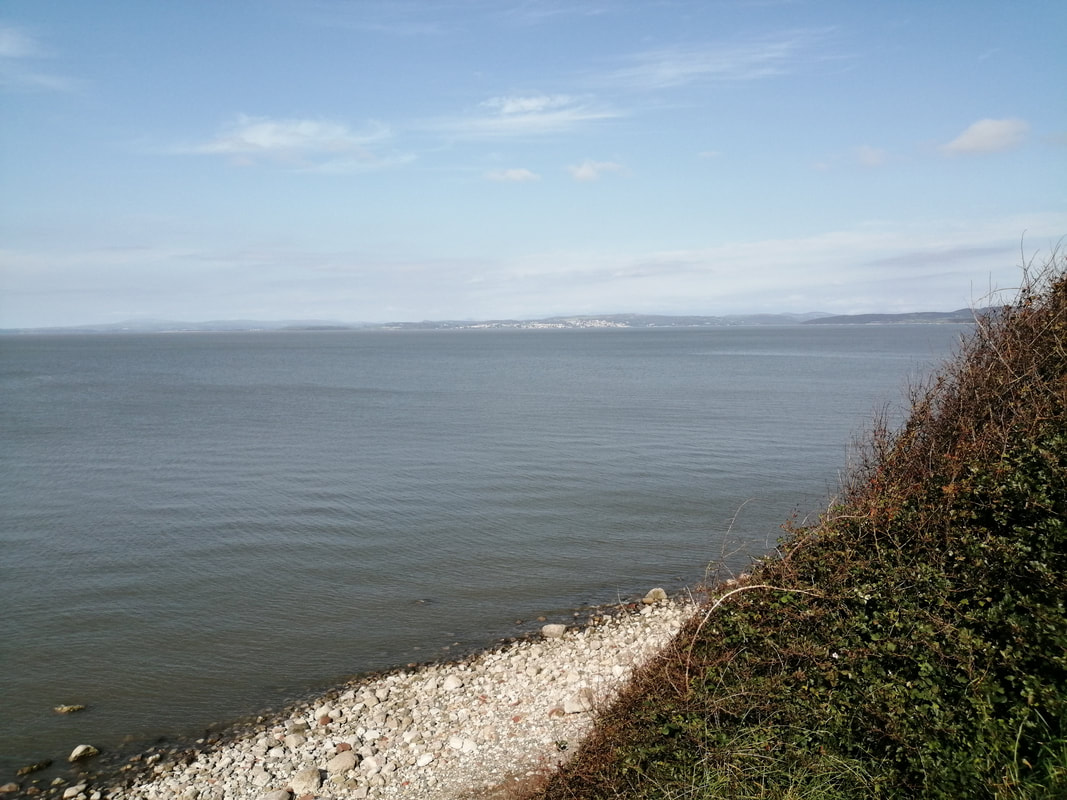
PictureSelkar Bay
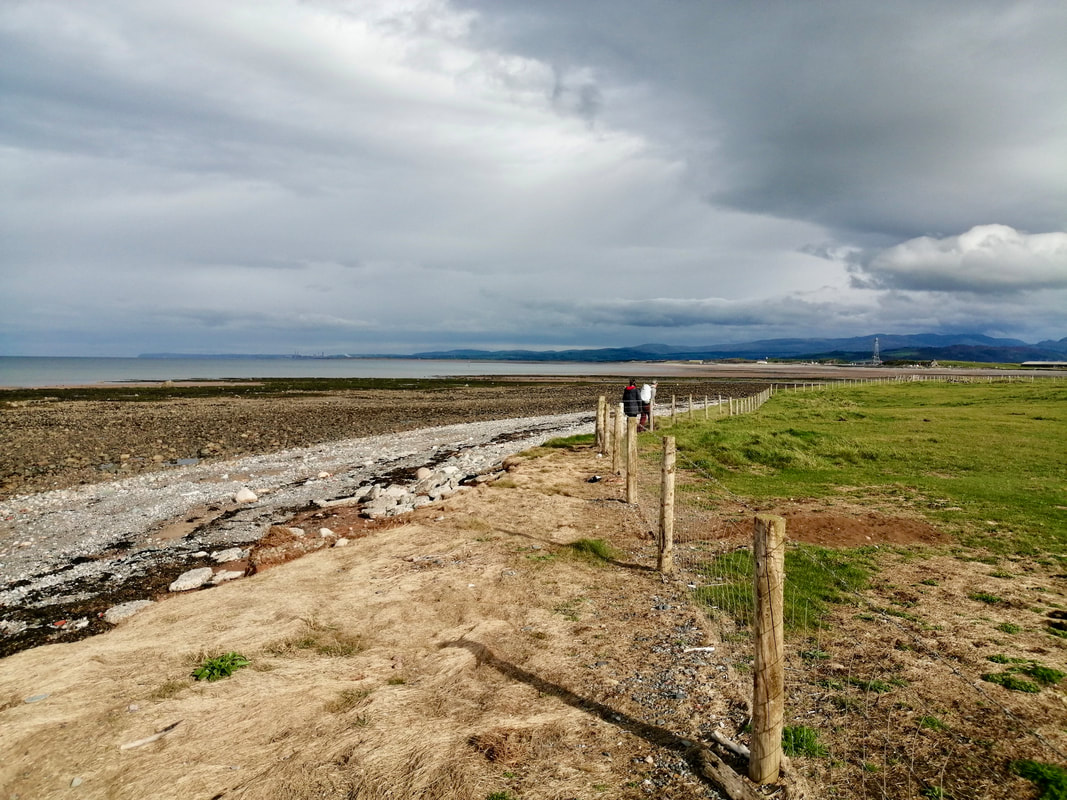
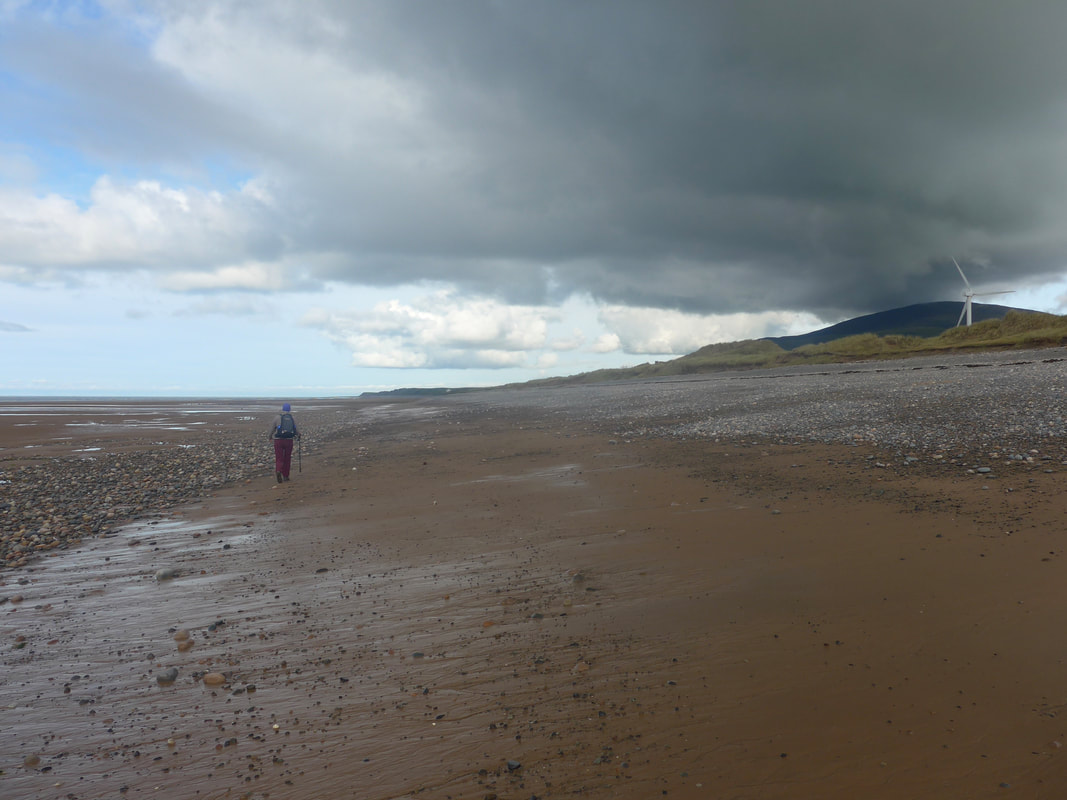
By the time we reached the shore at Selker Bay the clouds had started to gather overhead, essentially confirming we would be walking in the rain.  It was slightly chilly to begin with, a cold breeze coming off the sea, but we warmed up as we walked.

​​
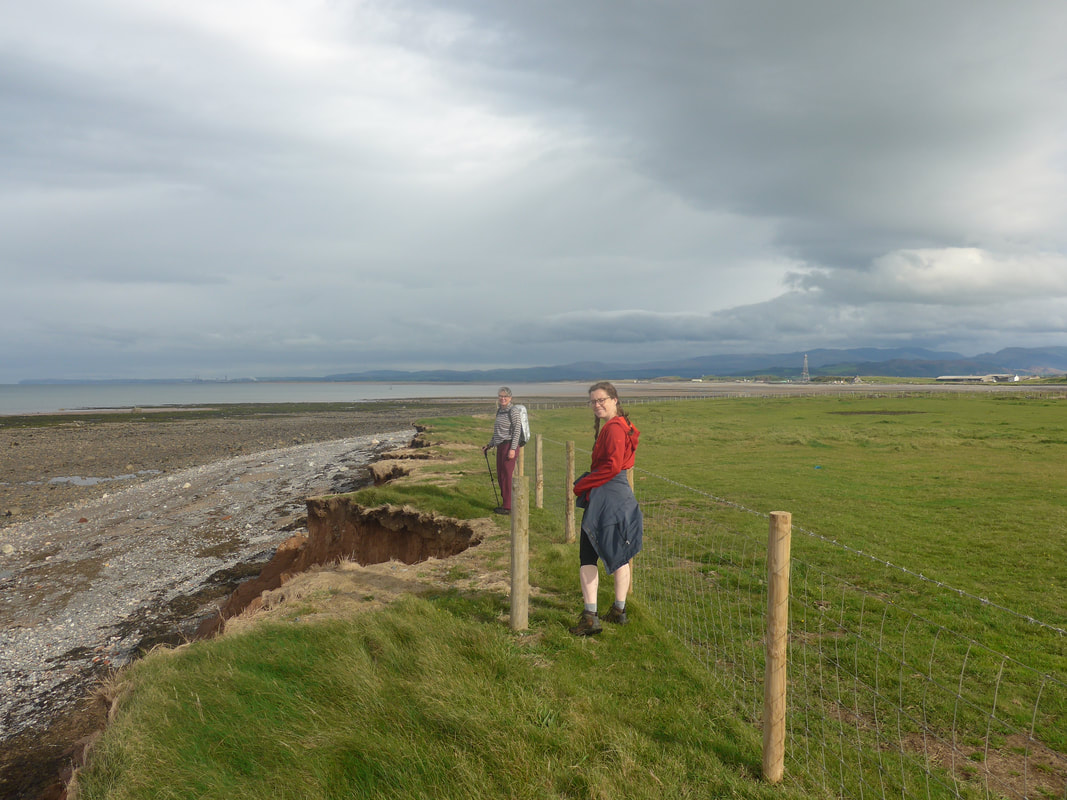
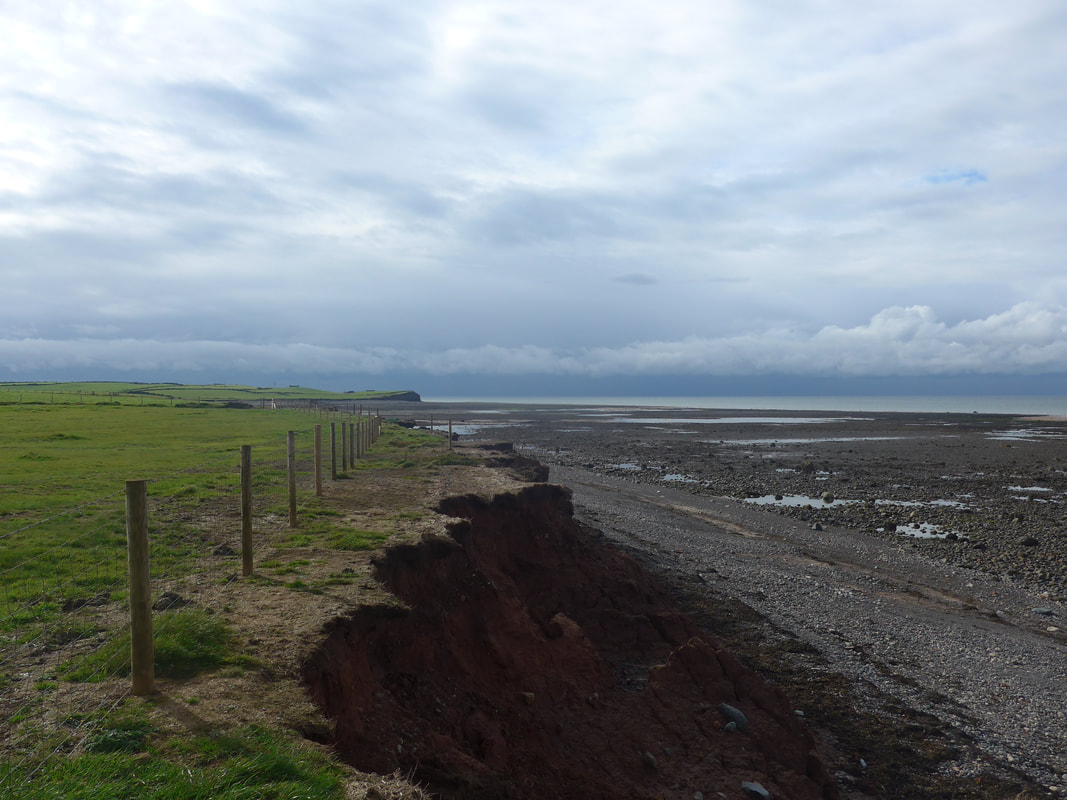
Walking behind the beach on a low raised shelf it was clear that the shoreline here is subject to fairly severe erosion. There were large bite-like gaps where the path should be and we were left wondering for how much longer you will be able to walk on the seaward side of the fence. Despite the overhead clouds and gathering darkness we had reasonable views out to sea and looking north over to the Cumbrian Mountains in the direction of Scafell Pike (3209 feet high, Englands highest mountain) and the Copeland Forest.

Selker Bay
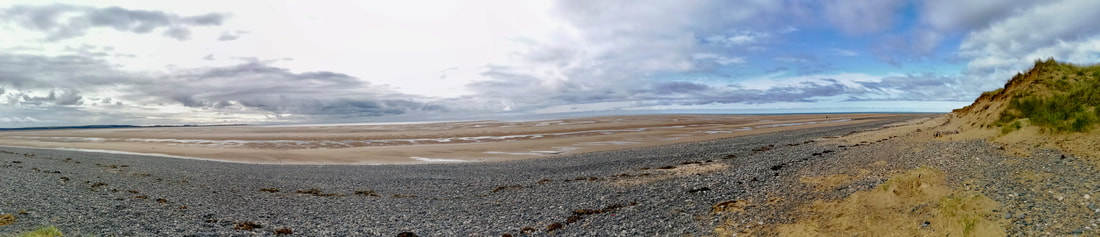
PictureEskmeals Range
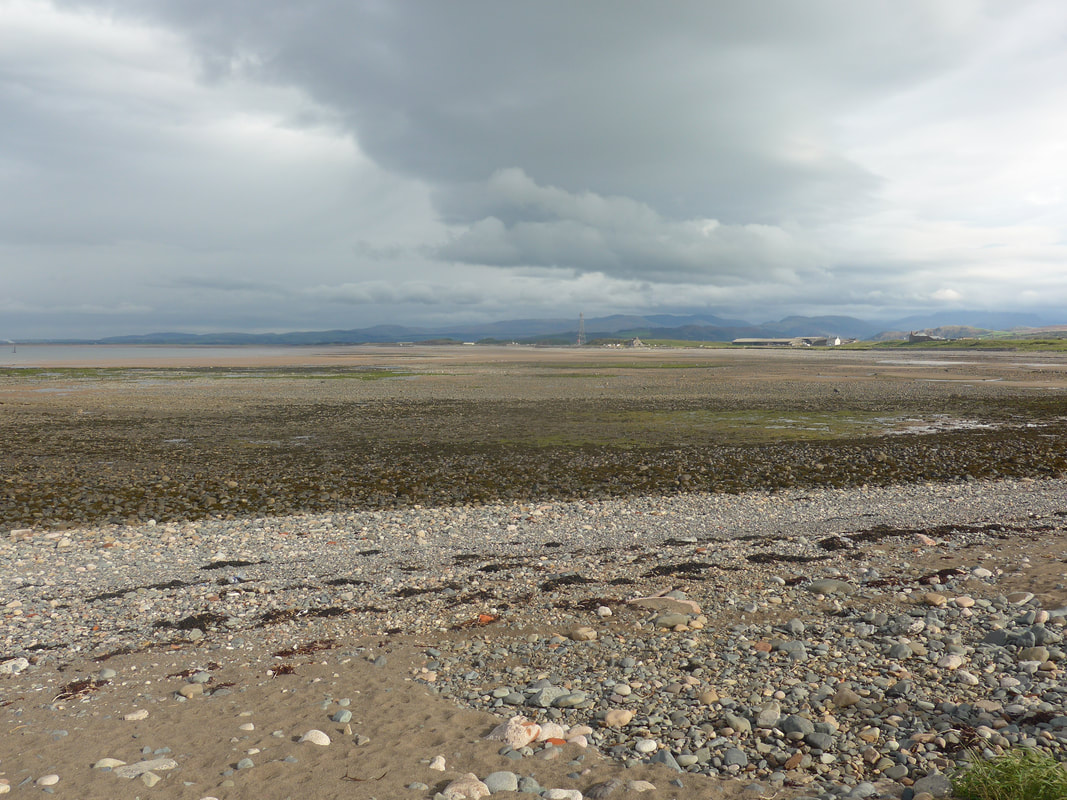
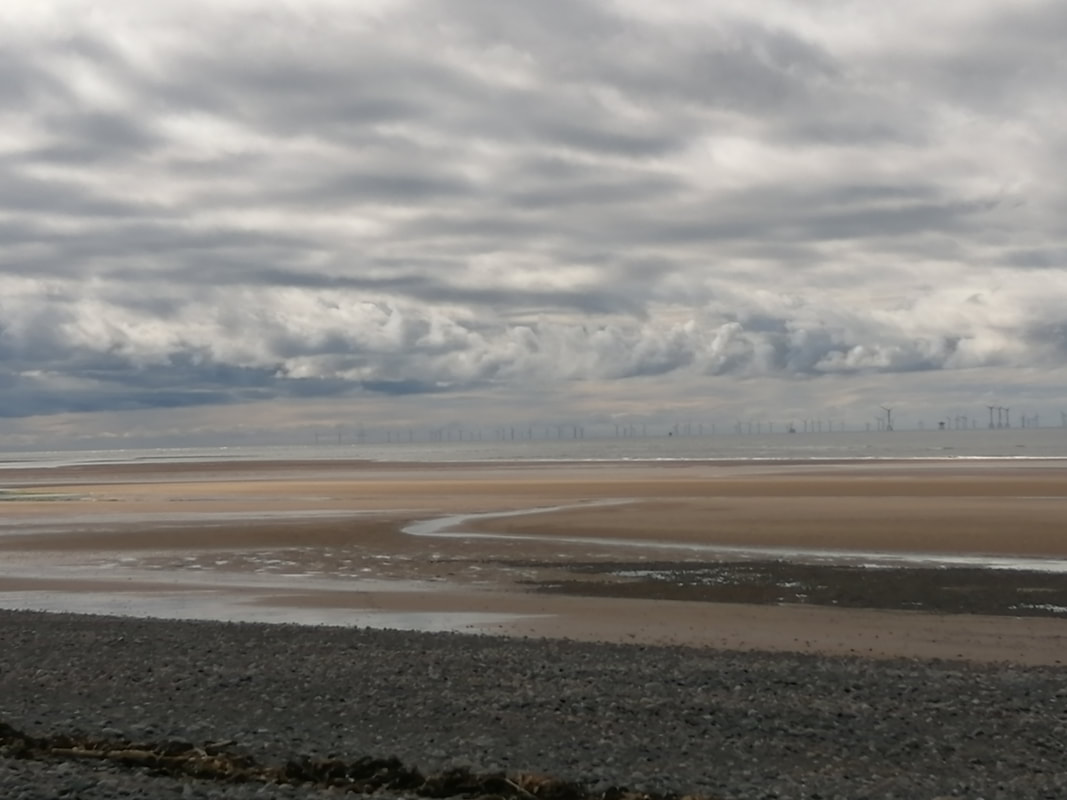
Rounding Tarn Point and into Tarn Bay we dropped down to walk on the muddy, pebbly beach for the section leading to the defence zone. You are walking here on the edges of the Lake District National Park to your right and, with the Irish Sea on your left. The Isle of Man sits on the horizon directly opposite the range.

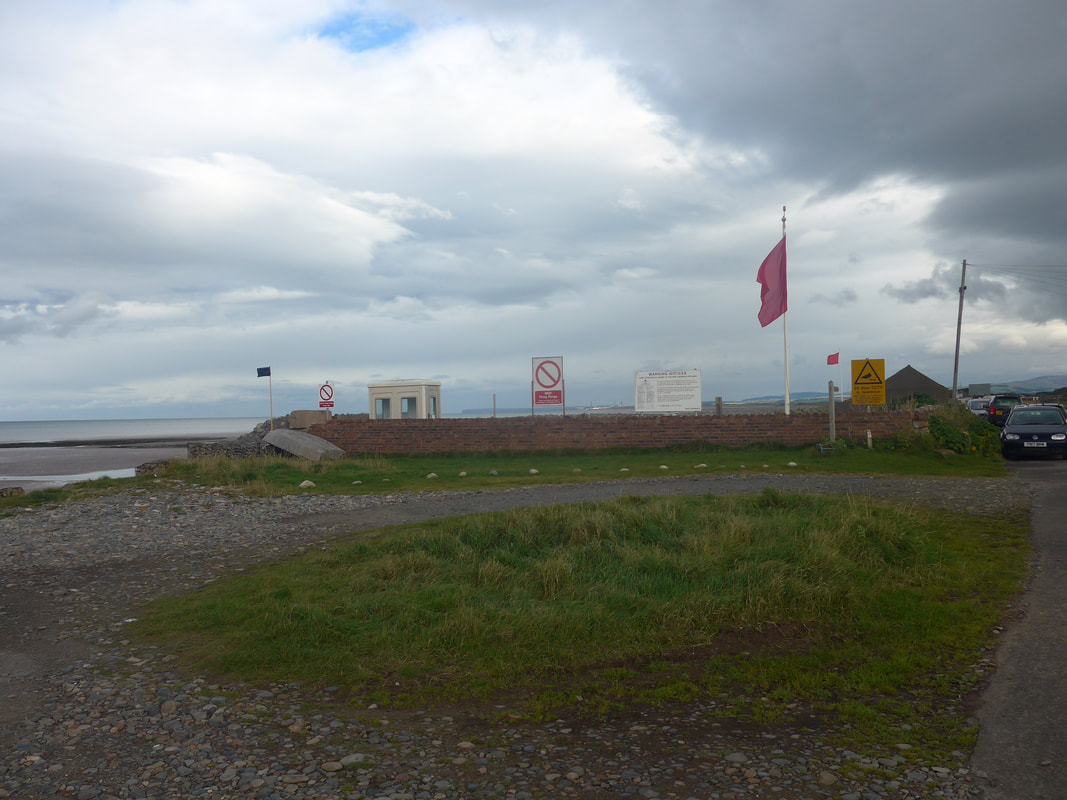
In the far distance in front of us we could see the dark outlines of St Bee's Head. As we approached the edges of the military base (Eskmeals) we were disappointed to see the red flag flying, indicating that there was firing activity on the ranges, meaning we would need to abandon our hope of walking along the front of the beach. It was obvious by now that while we might be walking beneath a huge, black cloud other areas were enjoying a wee bit more sunshine than we were. On our left as we took to the road, on the other side of the range, is the southern end of the Driggs Nature Reserve, which contains the largest dune system in Cumbria. It is a major centre for breeding birds and home to natterjack toads and newts.

Rounding the MoD Base
The tide was just on the turn when arrived at the River Esk. When it is low like that it is more like three or four different little streams than one broad river. You can see that the water level in the nearer streams was still quite low, but it was difficult to make a judgement about the furthest stream without taking the plunge. Off with the boots and socks and onward McDuff!

​Apart from being very cold and stoney underfoot, it was only on the final part where the water came over the ankles and reached about knee height. It was the cold that got to you. By the time we reached the far bank I could not feel my feet or lower legs. The exit was over jagged stones and mud which we had to cross before reaching land dry enough to sit down and put the boots back on. As we dried off the feet the rain came on.
Crossing the River Esk
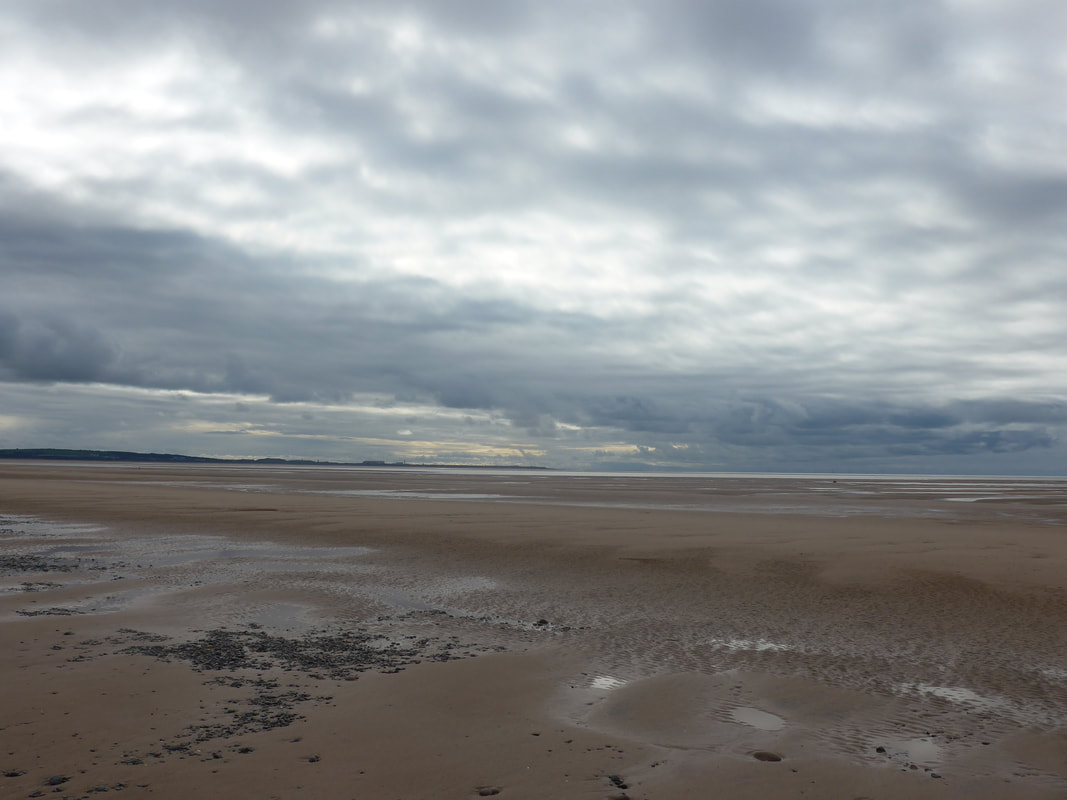
PictureApproaching Ravenglass
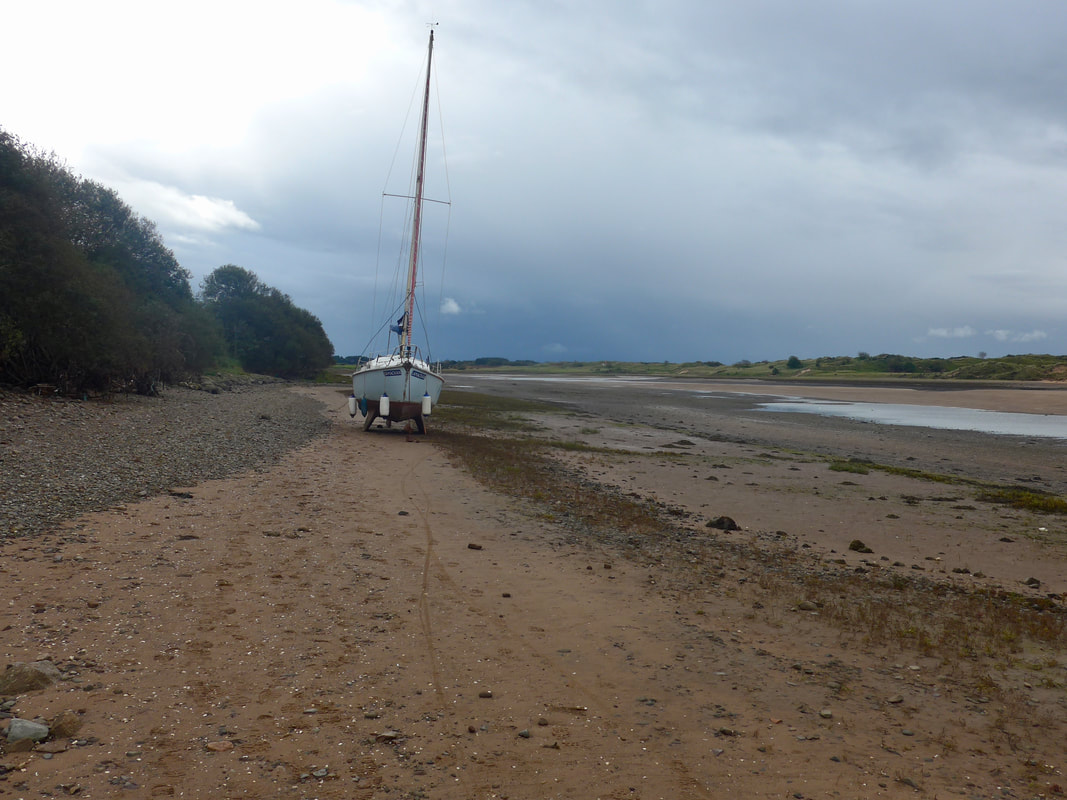
Once we were over the Esk, socks and boots back on, it was a drizzly walk along a muddy and pebbly beach to the village of Ravenglass. The river itself runs down to the village where it turns towards the Irish Sea, discharging just opposite the Isle of Man. With the rain on we decided to seek solace at the Inn at Ravenglass where we enjoyed coffees and scones, waiting for the rain to abate.

Ravenglass is on the estuaries of three rivers: the Esk, Irt and Mite. It was a Roman garrison town for three hundred years with about five hundred troops based there. There are the remains of a Roman bathhouse in the village, with substantial remains still visible. There is little visible evidence of the Roman fort that was there.  

The seven-mile Ravenglass and Eskdale Railway starts here, terminating at Dalegarth Station, near the village of Boot. Privately owned and supported by a preservation society, the railway was established in 1875, originally to transport the ores mined in nearby valleys.  A passenger service was introduced in 1876. Following a gradual reduction in both trade and passenger services the line was closed to passengers in 1908 and to freight in 1913. Reinstigated in 1918, the railway operated in various shapes and forms and under various owners up until 1960, when it was sold at auction to a private company, supported by the Ravenglass and Eskdale Railway Preservation Society.

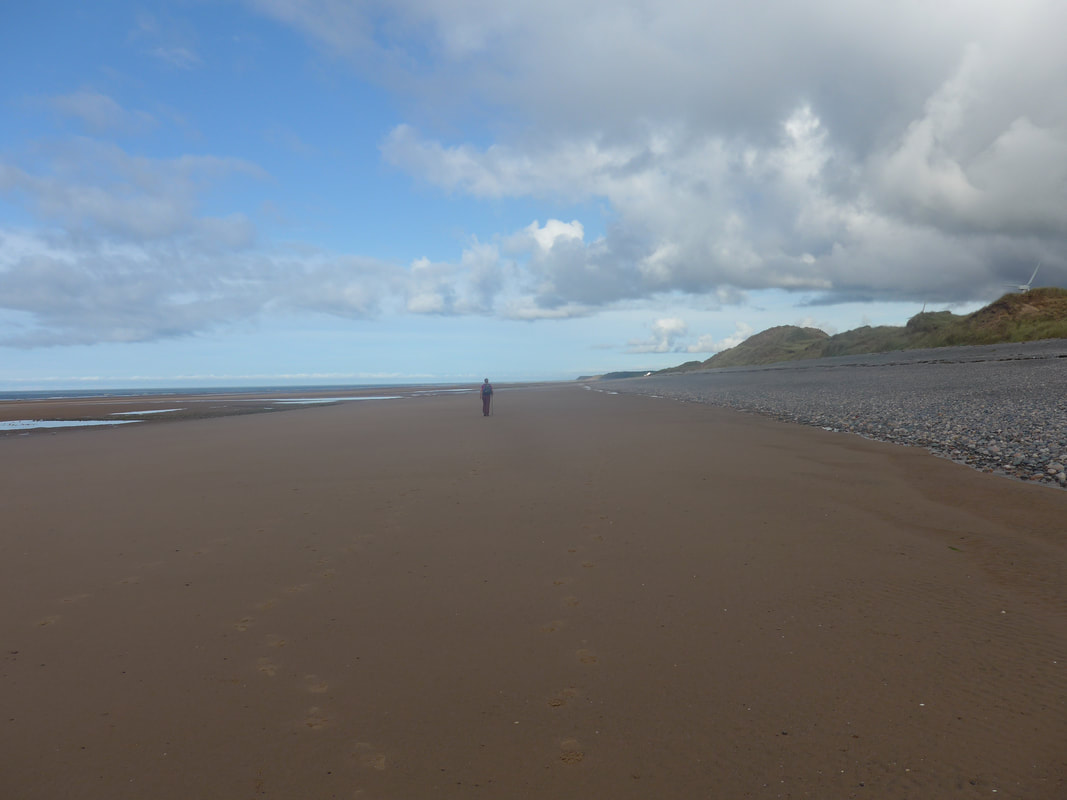
Beach at Ravenglass
PictureRavenglass - with pedestrian bridge
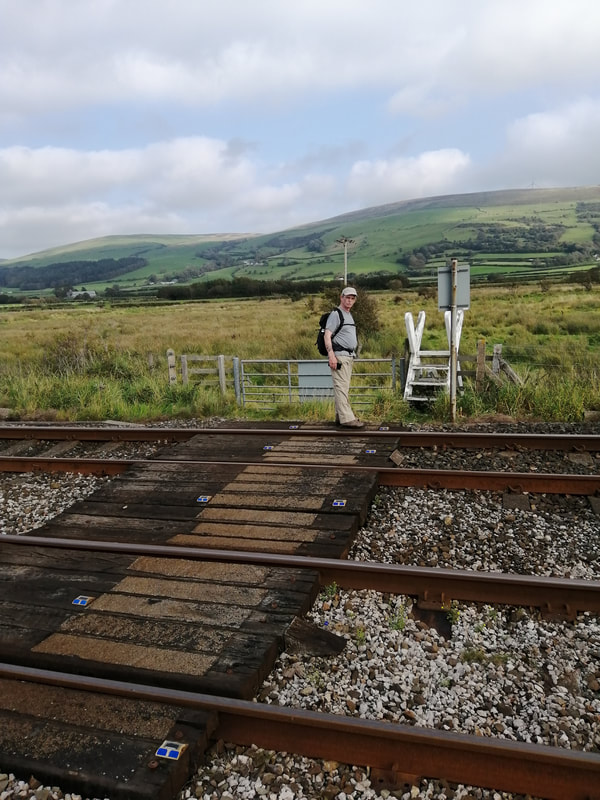
When it came time to leave the hostelry we headed for the railway bridge. The River Mite empties in to the River Esk at Ravenglass but thankfully there is a pedestrian bridge strapped on to the edge of the railway bridge which makes crossing it easy. By now the tide was well in and there was no way we could have used the ford by the bridge. Looking at the high mud banks on the ford it did not look like it would have been a pleasant experience.

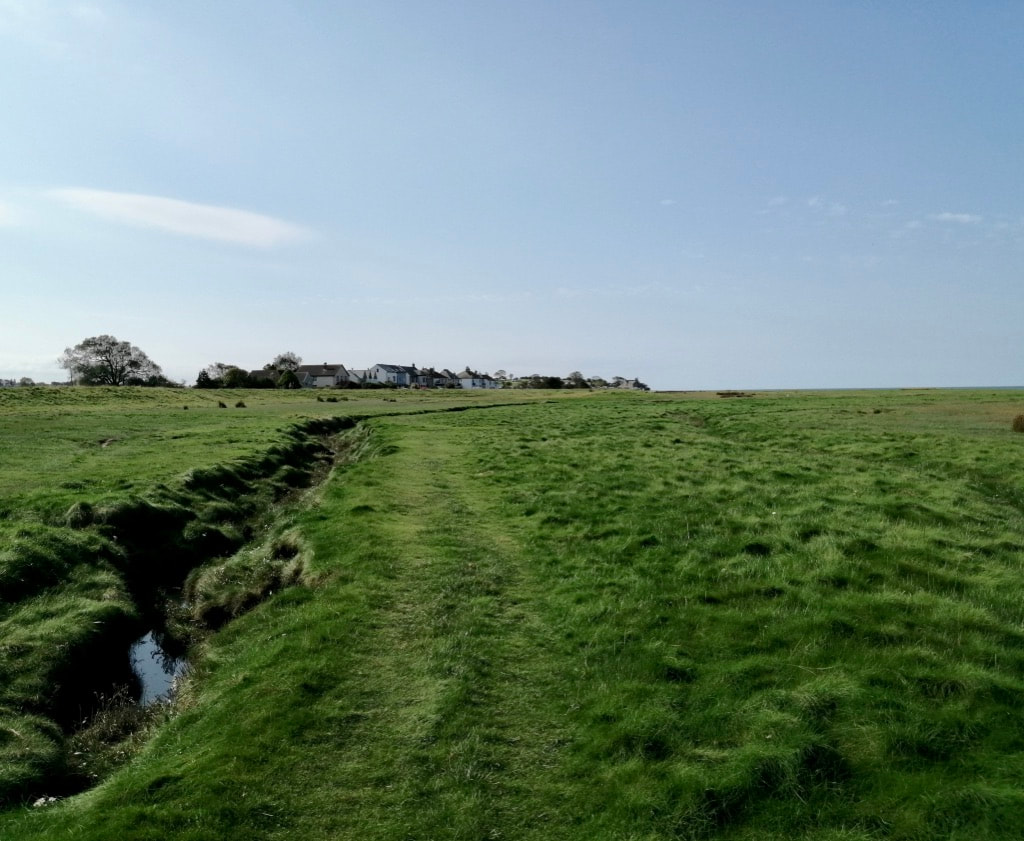
Coming off the bridge we moved on to a pedestrian walkway which crosses a marsh, part of the nature reserve. The views back to Ravenglass from the walkway were quite spectacular with a sharp contrast between our dark environment beneath a huge thundercloud and the white light on the distant horizon over towards Barrow-in-Furness. 

The high water level as we walked convinced us that it was unlikely we would be able to cross the ford on the River Irt later on at Drigg, which we were scheduled to reach just about the high tide mark. If we were unable to wade the River Irt, plan B was to divert just before Carleton Hall to take the road detour via the Holme pedestrian bridge.

​The River Irt was once famous for black peals which grew in its fresh water mussels. Sadly, very few of the mussels remain now, poached almost to the edge of extinction. As we walked this section the rain continued to fall,  becoming heavier with each mile walked.

Ravenglass to Holme Bridge
After crossing the marsh the route comes on to a minor road by Lower Saltcoats, the road continuing on up to Carleton Hall. We turned off before the hall to reach the Holme bridge over the Irt. It was a quiet enough road with very little traffic. A track led off the road on to a cross-country section leading to the bridge. Despite the poor weather we enjoyed this part which is a nice woodland walk and the bridge itself and surrounding area arenice. Coming off the bridge the walk continues across arable land to reach a track leading to the B-road that leads in to the village of Drigg. 
​
PictureComing off Holme Bridge
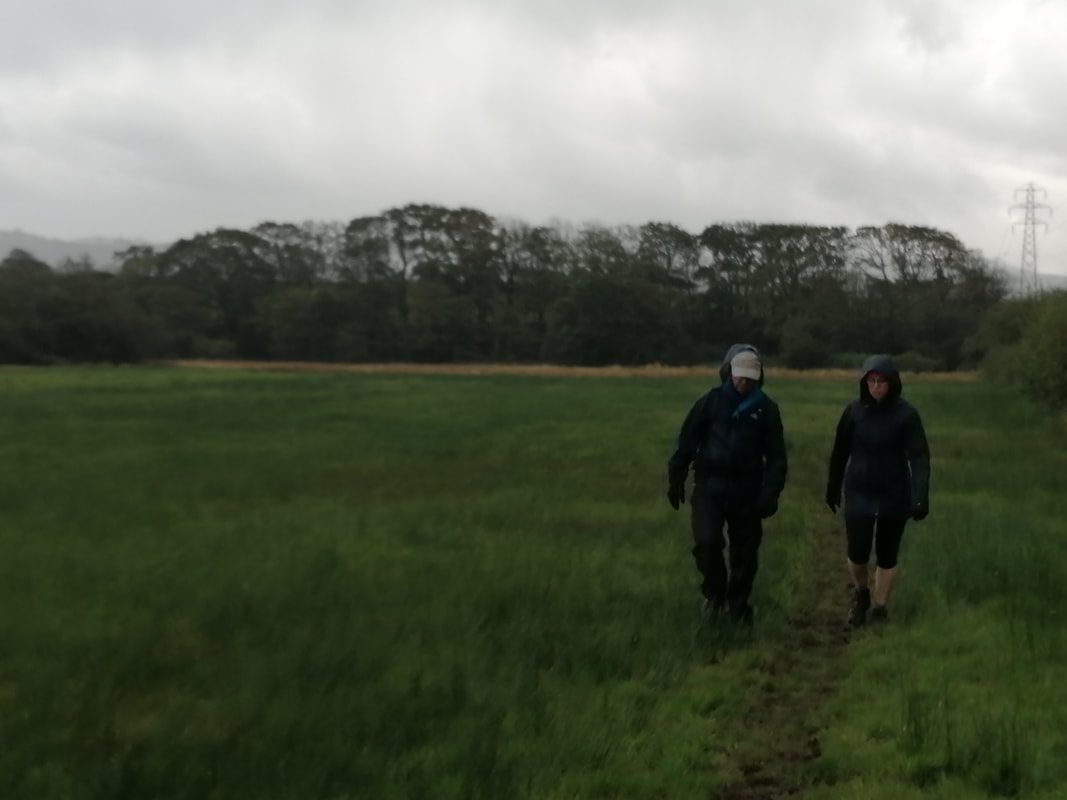
By now the rain was very heavy and we were all soaked through. The original intention had been to head out to the beach at Drigg and to finish the walk along the coast. However, given the rain and the cold wind we decided to avoid the exposure of the beach and stick to the road for the last couple of miles to Seascale. The camera stayed in the bag for this section as we put the heads down and walked directly into the wind and the rain, offered scant shelter by the hedgerow. The cars speeding by had little consideration for us, splashing up large volumes of water off the road.

If the Gods were with you and the pieces of tide, weather and firing times on the range fell in to place, this would be a very nice walk. Despite the gloom and the heavy rain we did enjoy parts but by the latter end it would be fair to say we were pretty miserable and more than happy to finish.

0 Comments

Millom to Bootle - 15 Miles

24/9/2020

0 Comments

 
Picture
Route Map
For today's walk I was joined by Joanna Elizabeth as we continued to skirt the western edge of the Lake District. The Cumbrian Mountains lay slightly to the north east of us and as we round Hodbarrow Point and head up the west coast we will have the Black Coombe on our right for most of the day. At six hundred metres the Black Coombe sits isolated from other peaks in its range and as a consequence is said to offer lovely panoramic views. Maybe a climb for another day? The weather forecast for the day was slightly iffy and we made sure to pack the waterproofs. Between Millom and our destination at Bootle, apart from Haverigg, there are no settlements on the shore so we carried water, lunch and snacks and the Jetboil for a brew-up.

Picture
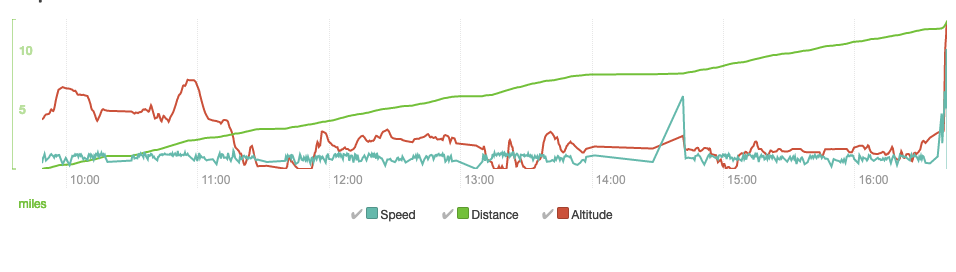
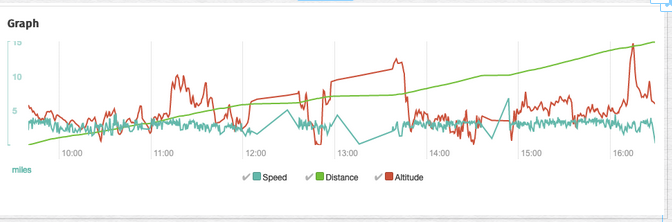
Speed, distance & altitude
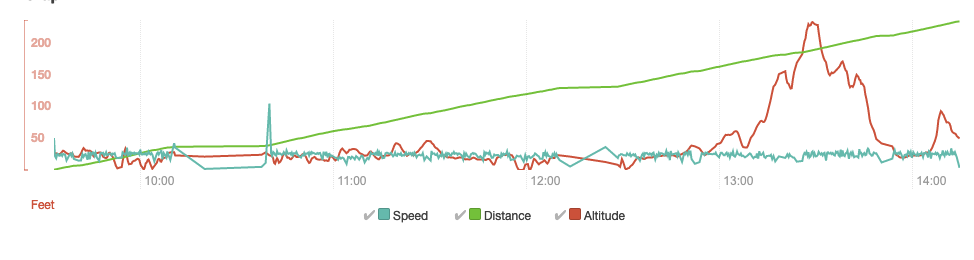
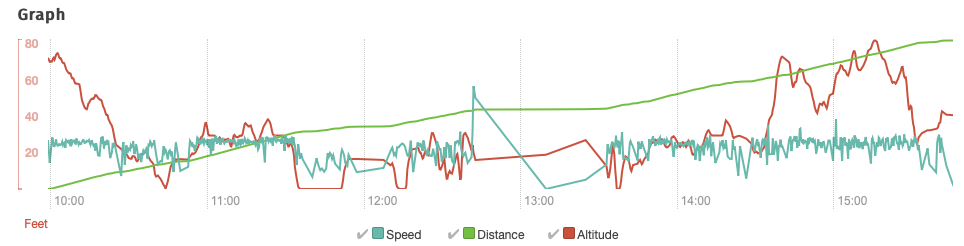
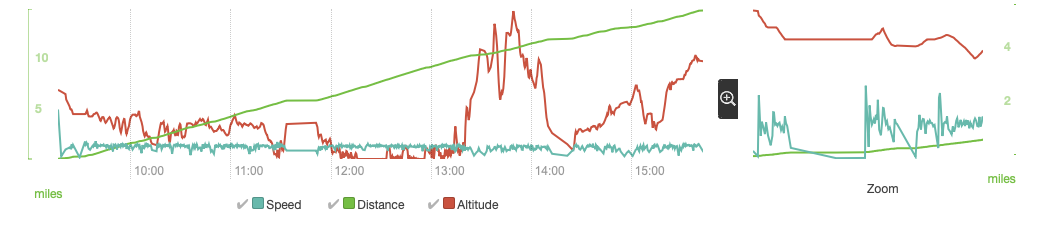
The route today sticks firmly to the coast until we cut inland at the end of the walk to access Bootle railway station. There is a very small diversion to go round the Whicham Beck which discharges in to the sea at Haverigg, otherwise, you can pretty much walk right on the beach as long as the tide is with you. The walk is fairly level with only the occasional short rise to at most one hundred feet round about Gutterby.  
PictureHodbarrow Lagoon
We left Millom about 9.30am after buying packed lunches. From the High Street we headed through the town, towards the railway station and out to the start of the path round Hodbarrow Point.

The route goes round Hodbarrow Nature Reserve, which overlooks Duddon Estuary. Duddon lagoon was previously the location of an iron mine. The construction of an outside retaining wall in 1905 protected the mine from the sea but with the abandonment of the works in the 1960's, the mine was allowed to flood creating a spectacular fresh water lagoon. Despite the time (9.30am), as we approached it there was still an early morning, ethereal quality to the light over the water which made for fine viewing. Beyond the lagoon, out towards Black Coombe, we could see heavy clouds starting to gather over the mountain and we feared a downpour later in the morning.

There is much to admire as you go round Duddon Reserve and many fine views to be had. Looking south over Duddon Sands you are looking over to Askam-in-Furness and behind it the peaks of Bank House Moor. Slightly north east lie the fells of Furness. Mentioned earlier, Black Coombe dominates the inland view and beyond that the Corney and Thwaite fells at the bottom end of the Lake District National Park.

​On Hodbarrow Point itself there are two lighthouses known as Hodbarrow Lighthouse and Hodbarrow Beacon. The latter is the oldest  and one of the last remnants of the old mine works. The Beacon was built in the 19th C. The younger 'Haverigg Lighthouse' as it is sometimes known, was built in 1905 and decommissioned in 1949, before being restored, courtesy of Lottery funding in 2004. In the panorama photograph below, both lighthouses can be seen at either end of the photograph.

Picture
Duddon Point Panorama
Hodbarrow 
PictureSand Patterns
Walking along the southern edge of Hodbarrow Point and afterwards, just beyond Haverigg, we were taken by the naturally occurring patterns of the sands and pools on the beach. As well as being very pretty, such patterns can tell us about the local environment including features such as wind and water strength and direction.

It is not only on the rippling sands that one finds such repetitive patterns and they have been a recurring feature of our coastal walk, found in and on all kinds of natural materials. It can vary from the patterns on animals coats, on the shells of sea urchins, regularities and irregularities of form on all sorts of plants from their flowerhead to seed cones, patterns on leaves, rock formations, sand dunes and even the Peacock's tail.  Naturally recurring patterns have explained much in mathematics, biology, physics and chemistry. Scientist's and philosopher's alike have studied naturally occurring patterns in nature from the time of Plato, later with Alan Turing in his studies on developmental biology, and currently work on storage systems for everything from computers to flat-pack furniture. 

PictureConcrete blocks, Hodbarrow Point
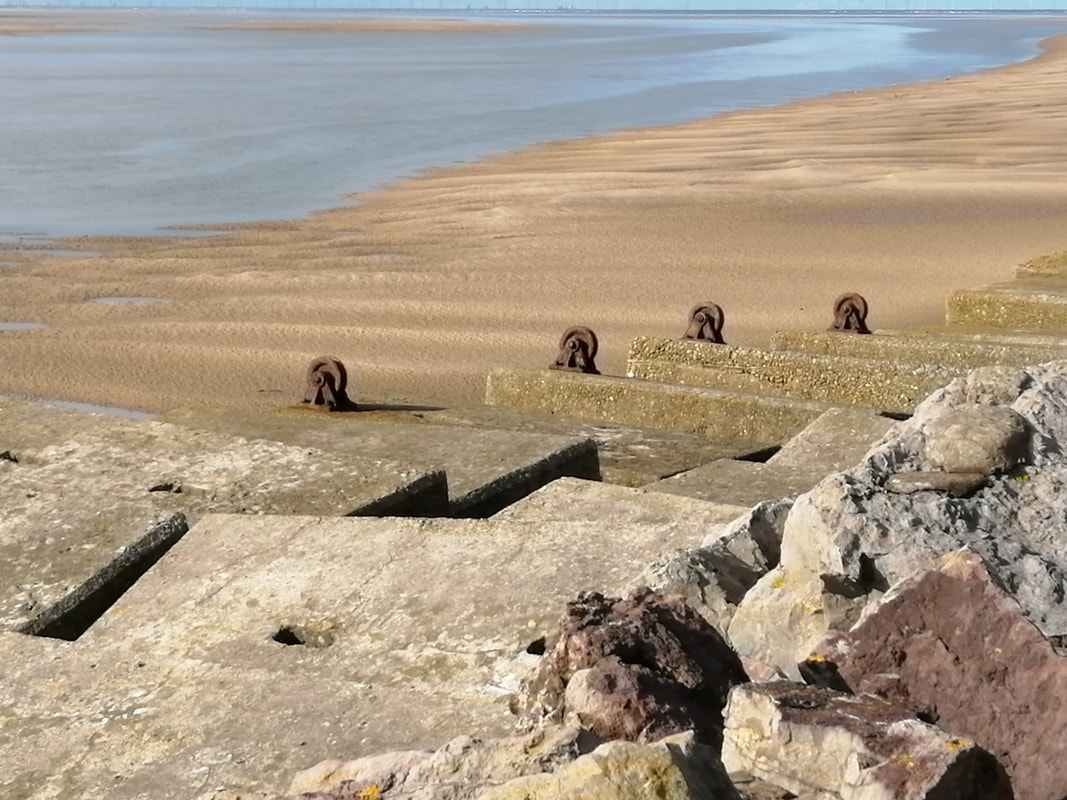
Along the southern shoreline of Hodbarrow Point there are a number of concrete blocks lying just beyond the large rocks that form part of the formal sea defences. Most of them have a date chipped on them and some still have the remnants of block and tackle mechanisms on their top which are the giveaway that they are leftovers from the old ironworks.

​From the far side of Hodbarrow Point there were fine views back over the water towards the area of the Furness Fells, which is where the Old Man of Coniston is located and coming round the west end of Hodbarrow there was a good view forward to the small village of Haverigg.

PictureWhicham Beck to Walney Island
Coming off Hodbarrow it is a short walk along the back of the beach to reach the village of Haverigg and the river known as Haverigg Pool. A little derelict looking with the tide out, there were one or two small sailing skips laid up on the bank. The gathering clouds set the light wind to singing in the braces, the wires of the sails keeping a dull metallic beat.

After clearing the beck we were able to move down on to the beach to continue our adventure which was by now being walked in a gloomy light. At times, it felt as if we were on a night walk and, if the light deteriorated any more, torches would be required. Just after Haverigg the beach is a mixture of stone and sand which can be uncomfortable to walk on. However, to the back of the beach, just above the tide line, there is a clearer, well trodden path that is much easier walking.
​
Rounding Haverigg Point we passed just below Haverigg Prison where we could clearly hear the noise from something like a football or rugby match; male voices alternatively cheering and jeering. Opened in 1967, the prison is built on the site of the an old RAF airfield. Classed as Category C, the prison accepts category C & D prisoners and, despite one or two costly disturbances, has a good reputation for offering employment and related training. The airfield was commissioned in the build up to WWII and, although initially classed as part of one of the fighter groups, it spent most of its years as a training establishment.

Duddon Sands
Picture
PictureBlack Coombe
The next few miles were walked in an odd mixture of sun and gloom. On the peak of the Black Coombe it appeared as if an evil was arising from the depths of the mountain, an effect that would have been at home in a 'Lord of the Ring' film. There seemed to be so rhyme or reason to the changes with breaks in the dark cloud suddenly appearing and letting the sunshine through before disappearing again. At times, we were walking just under the edge of the weather system. One minute the edge of the cloud would retreat inland and we enjoyed bright light, the next if was back over us and we were in near darkness. We found that walking slightly further down the beach relieved the gloom somewhat and we tried to do that. However, there were areas where the sand was very wet and soft which added a different level of discomfort and we sought out firmer ground. At Gutterby we moved up on to the hilltop where with the added height we enjoyed nice views over to the fells

Views from Gutterby
Picture
Duddon Sands
PictureWalney Extension Wind Farm
Despite the gloom, but with the threat of rain, we decided to stop for an early lunch just below the prison. From our perch up against the sand dunes we looked directly over the Walney Extension Wind Farm. Sitting in the Irish Sea, nineteen kilometres west of Barrow-in-Furness, the wind farm produces enough power to fuel 600,000 homes. There are eighty-seven turbines in the field, managed by Orsted in partnership with other organisations. According to the company's website they will be contributing some £15M to social and environment projects over the course of the 25-year project. While we sat captivated by the turns of the windmills the sky darkened over Mount Doom, the clouds rising from the peak like black sulphur. Slightly to the east of this wind farm there are another four with even more turbines.

Picture'Mount Doom'
Starting back after our early lunch break we continued to walk on the beach which moved constantly between reasonably firm sand and small and large pebbles. The latter was proving difficult to walk on, particularly given the tilt of the land. The light continued to deteriorate until we were walking in very dark conditions.

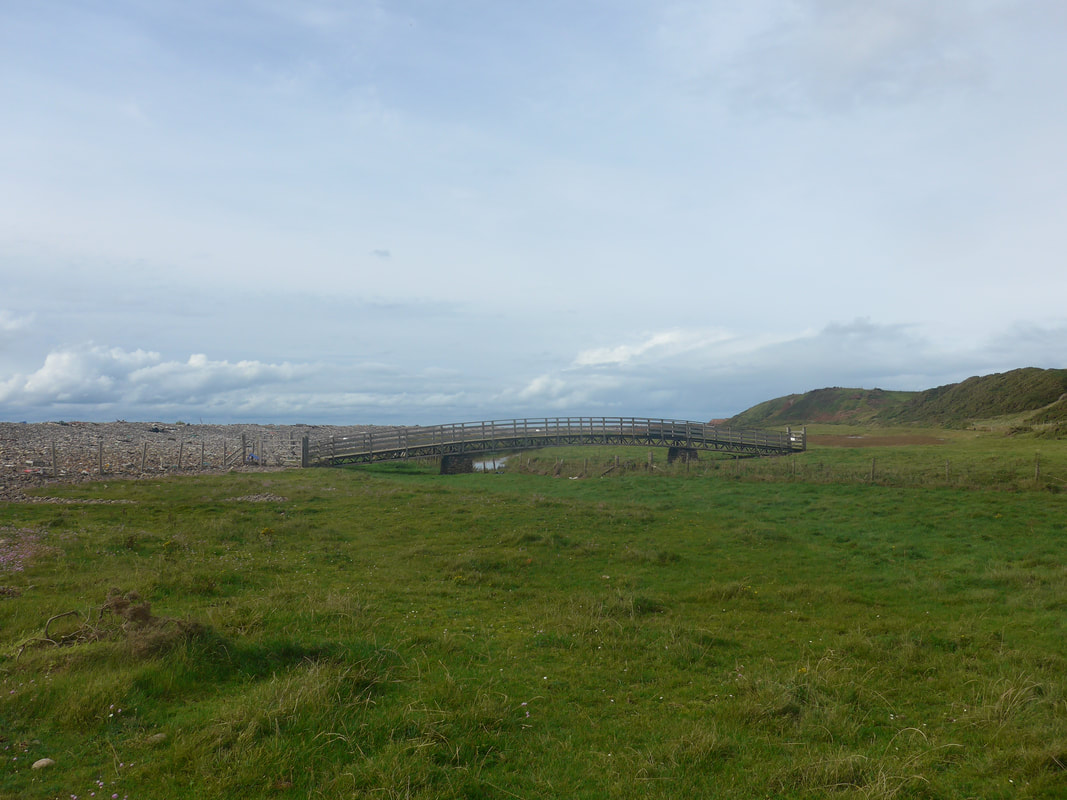
​From Annaside the River Annas runs along at the back of the beach before discharging in to the sea across the beach just by the hamlet of Selker. We were unsure of the volume of water that would be involved and whether or not the water could be crossed where the river crosses the beach.  Thankfully, there is a  footbridge over the river, lying at the back of the dunes before you reach the delta. Care is required then to make sure you find the openings in the dunes to access the bridge. For us, it was so dark that walking further down the beach we could not be confident we would see the opening and so moved closer to the dunes putting up with the uncomfortable walking on the pebbles. 

PictureFootbridge on River Annas
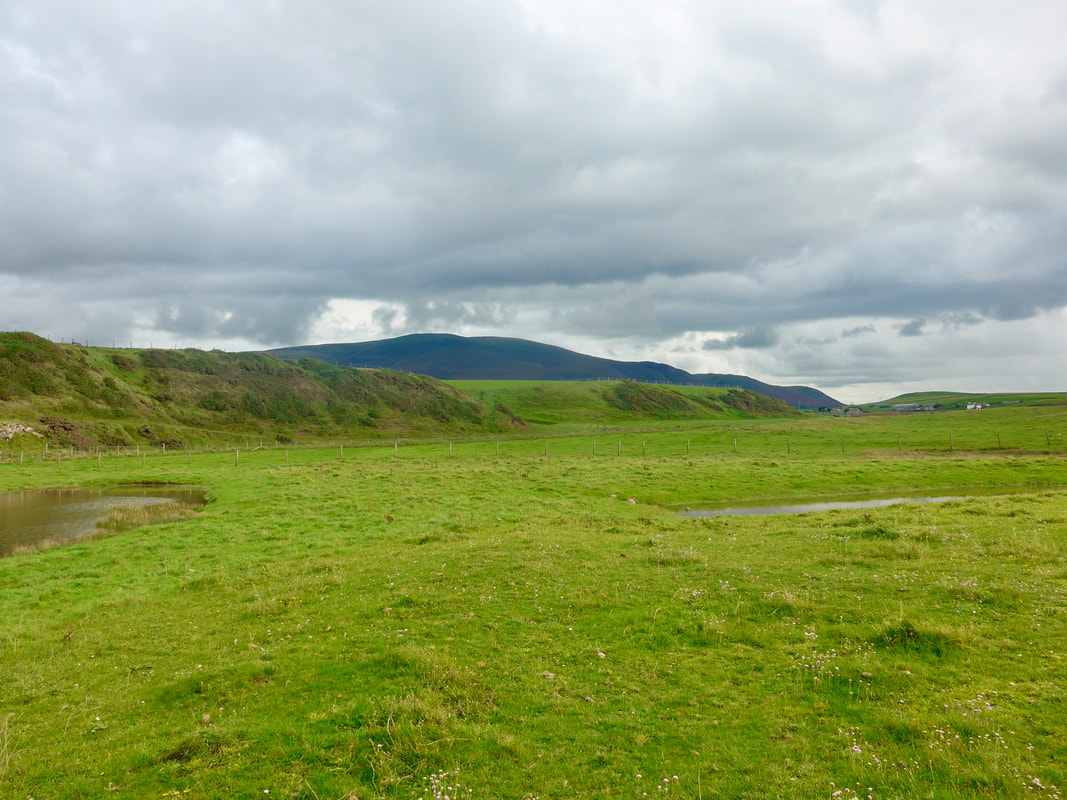
After crossing the bridge we continued to follow the line of the river, cutting through the Hyton Marsh Nature Reserve, until we ran out of land. Reversing a little we were able to find a way up a steep brae to the line of a path running up towards Selker. Once on the top we could see where works were underway to improve the path coming up from the river at an earlier spot. From the Seller hamlet we had a fairly straight forward route directly to the railway station where we were due to be picked up by our daughter to return to Millom. 
​

Hyton Marsh Reserve
Despite the dark overhead conditions, this was a nice walk. I imagine that on a day with better weather it would be really pleasant with a sense of light and space on beach or hilltop. That we managed to finish before the rain came was nothing short of miraculous given that black clouds had been over us for the whole day. We return tomorrow for the next leg of the journey from Bootle Station to Seascale. 
0 Comments

Kirby-in-Furness to Millom - 13 Miles

22/9/2020

0 Comments

 
Picture
Route Map
We had moved  to Millom the day before this walk, our new base for the next couple of day's walking. First action this morning then was to take the train back to Kirby-in-Furness to where we had finished the last walk. Walking on my own again I had hopes of keeping up a good pace and finishing at a reasonable time. OS maps show routes across the sands from Kirby to Millom but the advice I had from a few locals was not to chance the sands without a guide as, like Morecambe Bay, they can be treacherous. With no guide available that I knew of I chose a route that avoided the sands  and kept me off the busy roads.
​
PictureBridge with stile beyond
From the railway station I had a short walk to take a public footpath at Head Crag to access the eccentric footbridge over the water by the railway line. Coming off the bridge there is a stile on the left that leads to the side of a railway crossing that then leads to a number of path options. As I was walking on my own and given the reputation of the sands, I had already decided I was not taking that option. Neither did I fancy walking on the marsh which was very wet and boggy from yesterday's rain. Instead, I took the footpath towards Angerton Hall to then cut up on to the small road that runs round by Moss House and Waitham Hill.

Taking up the local road by Angerton Hall I realise I am going a long way round for a shortcut. However, it turned out to be a very pleasant walk with roadside views offering a surprising variety of colour and texture over the landscape. While the long distance view is somewhat limited today by the mist that lies over the fells towards Grizebeck, the walk still had attractive features. The road from Angerton to beyond Waitham Common was dearthly quiet with only two tractors passing me over the length of the road. The lack of traffic was to become a feature of the morning until I reached Broughton-in-Furness. At Waitham Hill the route passes just below Duddon Moss Nature Reserve which, as the name suggests, is one of the ​few remaining raised peatland habitats in England.
Angerton Hall to Waitham
PictureOver to Millom
The route meets up with the railway line again just below Angerton Moss where you are walking parallel to an area of marshland known as Galloper Pool. Looking across the marsh there are goods views over the Duddon Estuary to the Black Combe hill range above Millom. Although shrouded in mist it was still an impressive peak.

Just before Foxfield there is an almost single track road going off to the right which rises steeply up the hill to eventually come in to Broughton-in-Furness from the east. Towards the brow of the hill you pass in to the Western Lake District with the Dunnerdale Fells lying in front of you. Going north beyond Dunnderdale lies the Old Man of Coniston and to the east below the Old Man, lies Coniston Water.

I didn't know what to expect of the road but it proved to be a delightful walk during which I did not see a single vehicle until I re-joined a larger road at Boothwaite Nook, just before Broughton-in-Furness. From the roadside which rises steeply there were nice views across the dales which gave you a clear sense of what it must be like to live and work in this landscape. When I was a young boy whenever I recited or sang Robert Louis Stevenson's 'The Vagabond', I would dream of days walking on roads such as this with all my worldly belongings wrapped in a spotted handkerchief, hanging from a rudimentary walking stick!

Foxfield to Boothwaite Nook
PictureRiver Lickle, upstream
The pleasant idyll ended as I joined a larger road at Boothwaite Nook. This windy road with a number of blind corners and lots of careless drivers was a nightmare to walk on. Changing from one side of the road to the other to account for left and right hand bends was to take your life in your hands such was the speed at which the cars came round the corners. The risk diminished with the start of the pavement on the approaches to Broughton-in-Furness and I felt myself physically relax as I moved through the town. Once through the town the route goes on to the A595 for just over a kilometre until a turn off just after Duddon Bridge. Before the Duddon Bridge, which crosses the River Duddon, there is another smaller bridge over the River Lickle. 

River Lickle, downstream
Duddon Bridge
River Duddon
PictureDuddon Iron Furnace
I had decided to a detour at Corney Fell, up the hill and through the woods just to take me off the main road. How busy the road was became evident when I waited near ten minutes to cross Duddon Bridge because of the volume of traffic. When vehicles crossed on opposite sides of the road there was scant room for a pedestrian at the side of the road so I waited for a clear run  at it (literally).

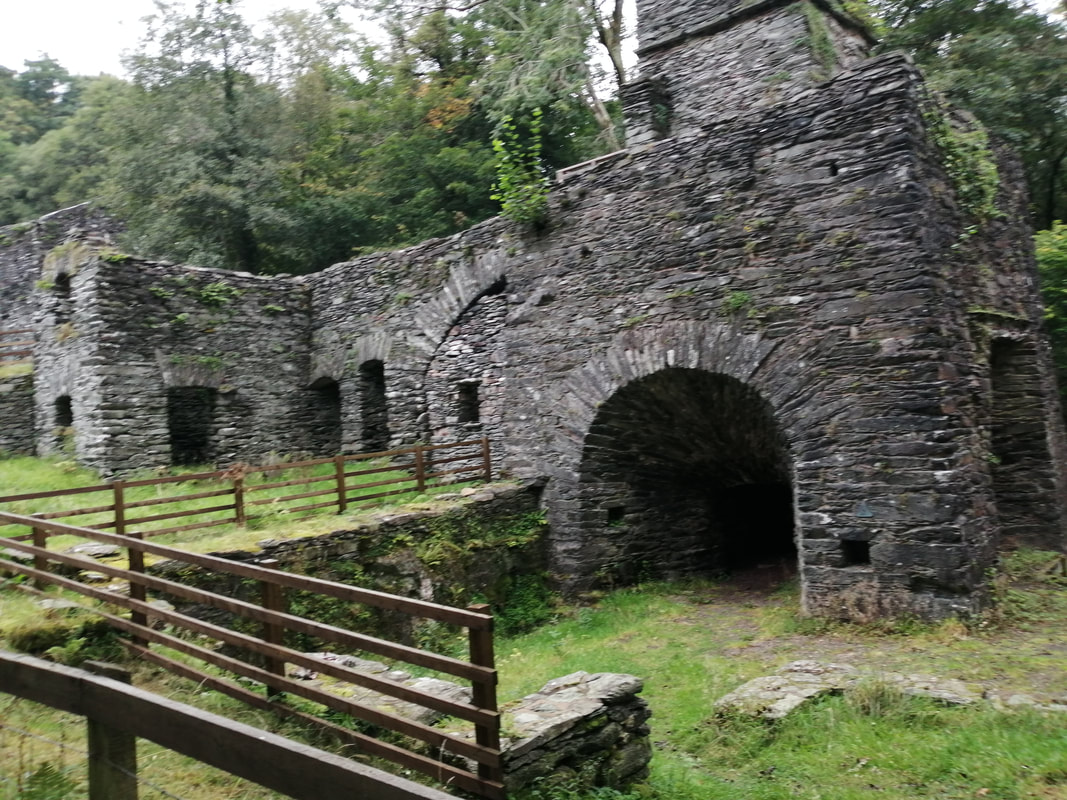
Shortly after Duddon Bridge my route took a right to head for a public footpath that cuts through the site of the old Duddon Iron Works, located in Furnace Woods. The actual iron furnaces, built in 1736, were driven by water power and fuelled by charcoal, using ten acres of coppiced woodland every week. There are substantial remains of the furnaces and the supporting buildings still on the site providing a fascinating glimpse to the industrial past of this remote rural area.  

PictureHill Path
From the iron works the route cuts sharply uphill, following the bed of an old water bed for part of the way. As I left the works site the weather deteriorated and a light rain started falling. The walking was slightly uncertain on wet and slippery stones and more than once I almost came a cropper. For the early part of this section I was hemmed in by the trees with no view to speak of. However, once I started to make height the landscape opened up, initially with tantalising glimpses through the trees of the Foxfield railway bridge crossing the estuary to pass Lady Hall. Later, as I cleared the treeline, I could see down the Duddon Estuary and across the local farmland and the marshes to the coast beyond.

​The path does not go to the top of the hill. About half-way up there is a steep, stony, zig-zag path on the left that descends back to the main road. However, you are not long on the main road, literally a few minutes, before you turn off. As you come off the hill there is a broad grassy area that enables you to walk the short distance to the quiet minor road that eventually leads down to Ladyhall and from there on to the quiet and remote feeling seawall.

Duddon Woods
PictureFoxfield Railway Crossing
The road down to Lady Hall was very quiet and only two vehicles passed me along its length. In the village I cut off to the left on to Lady Hall Hill to cut through to the seawall which runs from there right down to my destination at Millom. With no woodland to shelter me from the inclement weather, I was fairly exposed to a cold wind with light rain blowing in to my face. The mist that had come down rendered a bleakness to the outlook, with much of the opposite bank of the estuary faint behind the gloom.

The distance on the seawall from Lady Hall Hill to Millom is just a tad short of eight kilometres. Initially walking on Shaw Marsh, at Green Station there is a little jink to move on to a different dyke at Arnaby Marsh, finally walking along Millom Marsh. There were some interesting views across the marsh but with the poor conditions it was becoming a bit of a drudge. With the darkening skies I could see that much heavier rain could be expected. I tried to keep going but  just after coming on to Millom Marsh I gave in to hunger and stopped by  some sheep pens to shelter from the rain and wind and eat some lunch. Shortly after I started back I was surprised by the sight of my wife walking along the seawall coming out to meet me. it faired cheered me up and we finished the last couple of miles in happy harmony.
​

Lady Hall to Millom Marshes
0 Comments

Barrow-in-Furness to Kirby-in-Furness 13 Miles

21/9/2020

1 Comment

 
Picture
Route Map
PictureKirby Moor to Walney Wind Farm
After a few days based in a hotel Ulverston we moved today in two stages to our next base in Millom, where we have rented an apartment. First thing this morning we drove from Ulverston to Kirby-in-Furness. It was beautiful drive over Kirby Moor on a minor road that offered lovely views, as well as some very steep climbs and descents. The view from the hilltop just before you descend to Kirby was lovely, even in the light rain that was falling on the high moor.

Slightly to the south of our position we had a good view out to sea to the huge Walney Wind Farm and other smaller wind farms round about it that lie offshore opposite the mouth of the Duddon Estuary.  On reaching Kirby, we parked the car by the railway station and then took the train back to Barrow-in-Furness to start the walk along the coast. Waiting for the train, we spoke to a local woman who told us how hard it was during lockdown living in a small village where what little activities there were, were closed down for the duration.

PictureTo Millom & Black & White Combes
The route today, apart from the urban section in Barrow, sticks fairly close to the coast, with one or two short tidal diversions or to cut round land features.

It is a walk that remains fairly constantly at sea level with only a couple of small rises over the length of it. The weather forecast was good, with a small risk of showers at the Kirby end later in the day.

Walking light, we carried only day packs with map, waterproofs, lunch and snacks. At the other end, we will pick up the car again and move to our next accommodation, a rented flat, at Millom. Millom will be our base for the next three days, before moving on to Whitehaven for our final sections.


Picture
Speed, distance & altitude
PictureSolar Array at Palace Nook
In over 3,000 miles so far, we could count on one hand how often we have lost our way in the open countryside. Urban sprawl is a different matter and our record on negotiating the streets of the towns and cities of the coast is pretty poor. In the interest of maintaining some sense of integrity as a navigator, I will skate over our experience of trying to find a short-cut to the coast in Barrow-on-Furness. Suffice to say that after a number of deadends and 'no through ways', I admitted defeat and took my wife's advice to stick to the dual carriageway (A590) to the outskirts of Ormsgill.

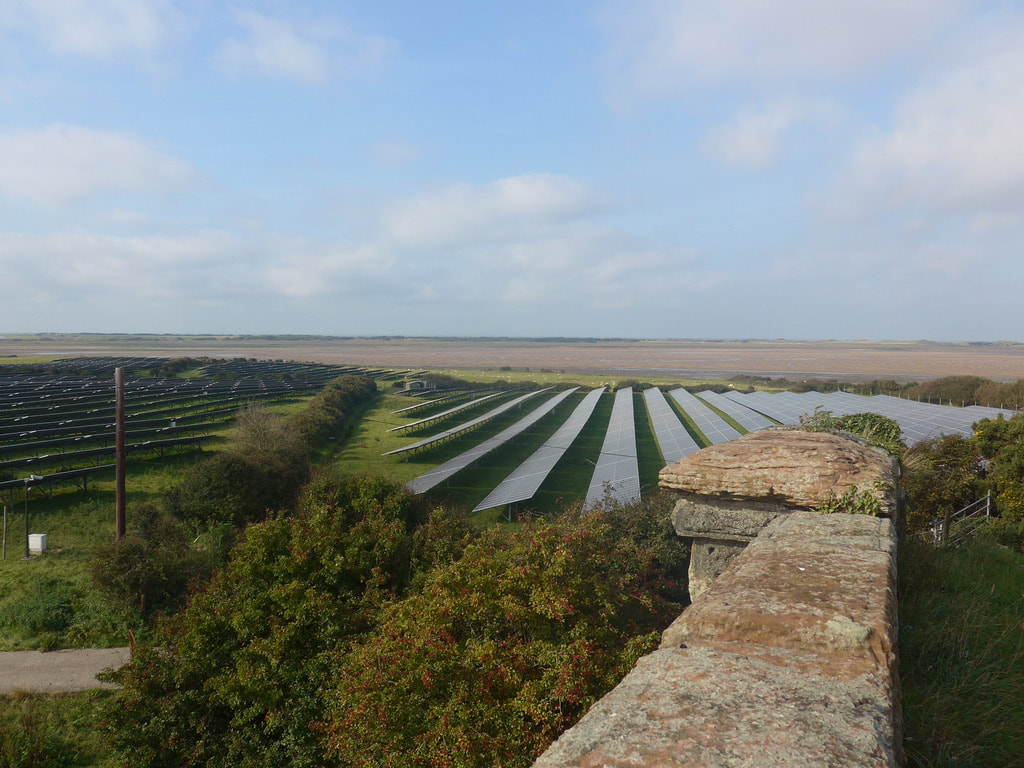
Just beyond Ormsgill we could take a public right of way down to the coast by Sowerby Lodge. On the way, crossing a railway bridge, we passed a huge solar farm in the fields of an area known as Palace Nook. In the planning application for the development it is estimated to consist of over twenty thousand panels, generating almost 5mw of energy. There are good views of the array from the  bridge. Once over the bridge we followed local paths down on to the beach just below Sowerby Lodge.

PictureShore at Sowerby Lodge Area
Lying just off the shore at Sowerby Lodge is the North Walney National Nature Reserve which lies to the landward side of Walney Island. The site is known for its large population of natterjack toads. The reserve protects a number of different habitats including sand dunes, saltmarsh and intertidal flats.

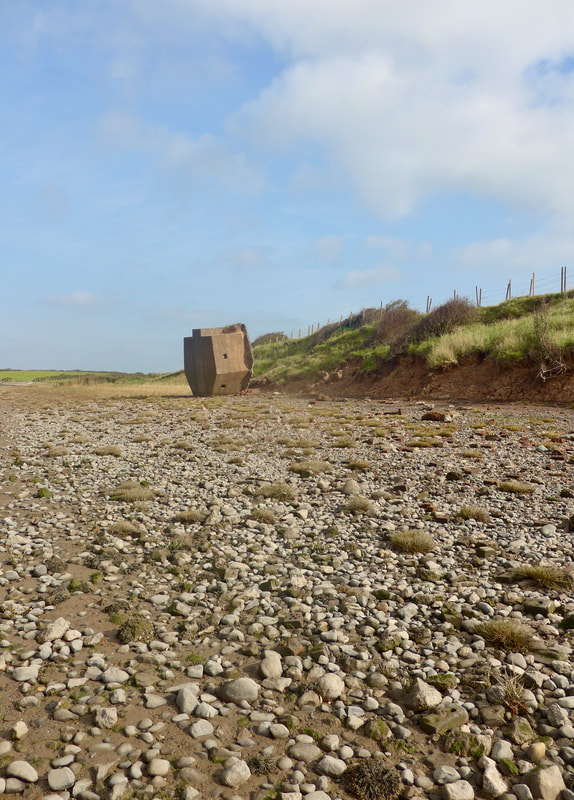
The coastal area around here has seen a lot of military activity over the years, particularly since the early 1900's with the growth of military industries in the local area. With the growth in industrial activity more defences were constructed locally and there are numerous reminders of this military past as you walk along the beach, including the upended pillbox in the attached photograph.

Upended Pillbox
Back to Barrow
To Sandscale Haws
PictureTo Lowes Point
The walking here was relatively good on either rough paths cutting through the back of the saltmarsh or walking on the rough stone beach. The view up toward Scarth Blight and the headland of Sandscale Haws was very clear on a bright but chilly morning. On the right as you walk there is a line of sand dunes, while on the seaward side there was just an expanse of mud and seaweed, with the sea a distant glimmer.

Sandscale Haws dominates the view to the front and because of its size you think it is much closer than it actually is. Consequently, you feel like you walk for ages and make little progress. Sandscale is a national nature reserve, managed by the National Trust and there is a Visitor Centre on site, but currently closed due to the Covid situation.

This first beach section ends at Scarth Blight. To your left here, the end of Walney Island, North End Haws, is separated from Sandscale Haws, which is on the mainland, by the Scarth Channel, which runs down from here to discharge in to the Irish Sea.

Picture
On Sandscale, at Lowsy Point, a small collection of holiday homes crowd round the southern shore, the black and white outlines of the superstructures picked out against the dunes behind them and, beyond, the dark hills behind Millom on the opposite side of Duddon Sands. Approaching the Blight we started to walk across the tidal sands where a pubic footpath is said to exist. However, because it is a tidal flat, there is no clear path to follow ,albeit we tried to follow it on our Rangefinder. As we progressed across the sands, however, we were put off by how far we were sinking in to it . Eventually, Joanna Elizabeth's common sense won out over my valour and we diverted off the sands just below Sowerby Cottages to take the slightly longer road route round to the neck of Sandscale Haws.
Leaving the Sands
PictureTo Lowsy Point
Following the road round the small bay and moving on to the line of sand dunes that run off Sandscale Claws was the easy part. What followed next was the equivalent of Moses wandering in the desert.

I find moving through sand dunes difficult at the best of times. When the path keeps disappearing, or when mountain after mountain of sand dune block your path putting you off in different directions, it is not long before the lost flag goes up. A quick look at the map will demonstrate where we were not paying attention to the route and for some inexplicale reason took a left instead of going straight on and ended up wandering in the dunes. When you are hot and tired and following very faint outlines on the ground it is easy to do. Eventually, sitting down for five minutes, taking a cold drink and thinking it through, we were soon back on the route. But just for that infinitesimal moment you experience a wee sense of panic and that is when you know it is time sit down and take stock.

Picture
Once back on the path it was a straightforward walk out to the visitor centre which was unfortunately closed. Passing through remainder of the reserve we dropped back down on to the beach just below Roanhead Farm. By this juncture we were clear of the sand dunes of Sandscale Haws and the views opened up with a lovely view across Duddon Sands & Estuary to Hodbarrow Point on the other shore, which is mid-way between the villages of Haverigg and Millom. We took advantage of a handy bench here sit in the sun and enjoy the view.

Picture
To the north, the village of Askam-in -Furness nestled in the edge of the estuary. It was a nice walk round the small bay, the concrete-like Askam Pier prominent against the blue sky. The settlement is actually two villages. The older of them, Ireleth, lies slightly inland behind Askam and has a history that reportedly goes back to Viking times.

The younger of the two, Askam, was established in the 1850's when iron ore was discovered in the area. On the back of this a local steel industry developed. The Askam pier was constructed from the slag that was part of the steel making process. Not the most beautiful of piers, I suppose it served a utilitarian as opposed to aesthetic purpose. We stopped on the approaches to the village for lunch, sitting on a bench, looking over Duddon Estuary, enjoying the view and watching the wading and roosting seabirds, taking the opportunity to check out the next section. To progress after lunch, we simply stepped through the large arch that is part of Askam Pier and on to the shore beyond.

To Sandscale Haws
Askam to Cumbrian Mountains
Looking to Dunnerdale
PictureAskam-in-Furness to Millom
Exiting the archway the countryside opens up to provide spectacular views of the various ranges of the Cumbrian Mountains, part of the Lake District National Park. To the left from Askam, looking over towards Millom, the heights of the Bootle Fells can be seen, including the Black & White Combes. Black Combe rises to a height of six hundred metres (1970 feet) and is said to offer some of the most beautiful views in Great Britain. On a good day it is said that you can see the Isle of Man and outlines of the Welsh and Scottish Hills. To the right as you look at it, the sub-top known as White Combe rises to four hundred and seventeen metres (nearly fourteen humdred feet).

To the north from Askam you are looking towards the Woodland Fell, beyond which lies the Old Man of Coniston and the famous Conisten Water, location for a number of the Arthur Ransome stories in 'Swallows and Amazons. On a day such as today it was simply breathtaking. A number of the mountain features on this panorama are included in Alfred Wainright's 'The Outlying Fells of Lakeland'.

PictureLooking to Dunnerholme headland
As sat and ate lunch we watched with amazement as the tide raced in across Morecambe Bay. Aware of the reputation of the bay we were nonetheless taken by surprise how quickly the tide rises. The rapidity with which the water comes in is just amazing. Care is required as you walk the beaches because the water does not come in in a straight line. If you are focussed only on what lies in front of you, unbeknownst, the water can be creeping in behind you and it is easy to be cut off.

Where before lunch we had walked on the lower shore, for the afternoon we were confined to the back of the beach. At times we were some distance from the sea, walking behind large stretches of delightfully coloured saltmarsh. The grasses and sea shrubs were, despite the season, a wonderful range of Autumn golds and browns, burnished by the afternoon sun. Gone now were the flocks of waders that had accompanied us in the morning and we were left to walk in splendid isolation. At times it was a bit of a clamber as the 'walkable' beach became narrower and narrower and we were occasionally forced to walk up against the retaining fence.

PictureCrossing the Rill
Not too long after leaving Askam we moved on to the edges of Dunnerholme Golf Club, walking on a good path through areas heavy with marram and other rough grasses. The occasional rill or channel running in from the sea was an early warning of some of the difficulty that lay ahead, albeit one or two had small foot bridges. With high tide the water table for some distance inland rises considerably. As well as making the walking slightly quelchy, it also raises the level of the water in the channels, substantially in some cases. Coming off the golf course, our route passed over the neck of Dunnerholme headland on which there is evidence of the local quarrying industry referred to earlier.

North of the headland there is a large expanse of saltmarsh that runs right up to the edge of the railway line. Walking through here we were often called upon to jump over some of the channels that had filled up with high tide. At one point we came to a long channel runnning north to south that was just too wide and deep to cross. As stood trying to puzzle out a way forward, a train passed on the line and we enjoyed waving to the passengers. Fortunately, before turning back on the path to retrace our steps, I took the time to follow the bank of the channel back and after about two or three hundred yards found where it petered out and we were able to walk round it.

Soutergate Saltmarsh & Water Channel
PictureCrossing the Marsh
Once we were beyond the water channel the route opened up again and the walking was a bit easier on a worn grass path. We continued to walk parallel to the railway as far as Souter Gate railway crossing where a water feature moved us to the other side of the track as far as the next crossing, just below Soutergate Farm. On this diversion you are almost in to the farmyard at Soutergate before you cut off left across a field to re-cross the rail track.

Once we were back over the railway again the walking became a bit more difficult as we pretty much lost our path to the water of the saltmarsh. For much of this section we walked on the sloping concrete bank that ran down from the railway line. The path eased again a bit further along and we found the odd bit of dryish path to walk on which, after the strain of walking on the angle, was a relief.

PictureTo Kirby-on-Furness
It was fairly straightforward after the railway crossing to reach the finish line at Kirby-on-Furness where we had parked the car by the railway station. Like yesterday, it had been a day of superlative views as we followed the Duddon Estuary, with sea and wonderful mountain panoramas. While a nice wee lunch a local hostelry  would have been welcome there was nothing on offer close to our route. Despite our schoolboy navigational errors it had been another good day's walking on a route I would not hesitate to recommend. Once clear of the town the scenery is at times exquisite

Picture
Kirby-on-Furness
1 Comment

Day 9 - Ulverston to Barrow-in-Furness - 14 Miles

20/9/2020

0 Comments

 
Picture
Route Map
Picture
It is always a delight when the starting point of a walk is right on your doorstep. Such was the case this morning when we fell out of bed and were straight on to the route outside the front door of our hotel. We have been blessed with the weather this trip, today no exception with another day of bright sunshine forecast. The high tide has been coming later in the day as the adventure has progressed. As it is not expected today until nearer 4.00pm, the plan was to stay on the coast for most of the walk.

Picture
Speed, distance & altitude
Picture
Our accommodation was on the Ulverston Canal but there is no direct route down the west side. Consequently, we followed the local streets down to Sandhall where we followed the path of the disused railway. There is an alternative path to the north of the railway line that is used by runners and dog walkers. We preferred the slightly wilder and overgrown path that runs down the side of a large sea channel leading to Morecambe Bay. Whilst it was a slightly trickier route it was the more interesting with various birds roosting and feeding in the channel at low tide.

The dismantled railway line is the remains of the Bardsea Branch line, established in 1883 and subsequently closed in 1917. The original plan was that the line would run from Plumpton Junction, outside Ulverston as far as Salthouse Junction, just outside Barrow-in-Furness, but the work was never completed going only as far as Conishead Priory. Originally intended to carry industrial goods, including loads of haematite, used in the production of iron. As part of the preparations for the line the rare and unusual rolling railway bridge across the Ulverston Canal was built.

The quality of the early morning light was wonderful, bestowing an ethereal, silver light over the waters and glistening sands. The soft mud of the embankments of the channel are a stark reminder of the dangers of the Morecambe Sands. Once clear of the overgrown railway embankment we enjoyed lovely, clear views out and over the bay. The main building of the Heysham power station dominated the distant horizon as it has done now for the past seven days. Fishermen lined the shore here, their rods cutting dark lines across the blue sky. 

Walking the Sea Channel
Picture
Morecambe Bay
PictureConishead Estate
The path emerges from the disused railway on to the shore just before the Conishead Estate, which was originally an Augustinian priory. The walking here is slightly uncomfortable on a rock-strewn surface but this gives way to a pleasant walk on the edges the lightly-shaded Beech Wood, with continued access to the beautiful views across the bay on the left. The estate, which is now home to the Manjushri Kadampa Meditation Centre is open to the public and you can access the grounds and the temple at set times. With too many miles to walk before the tide came in we did not have time to investigate the grounds and temple but it is a place I would like to return to.


Morecambe Bay in Silver Light
Picture
From Conishead down on to Ulverston Sands the walking was slightly uncomfortable at times on a pebbly / rocky shore. Nonetheless, we persevered and walked on the more solid sand or the occasional rough path at the back of the beach when we had the opportunity. What more can I say about the views on this stretch of Morecambe Bay? Eventually, you run out of superlatives and it just becomes repetetive. The best thing to do is to go and walk it. In light such as we enjoyed today it is simply stunning. It is in such circumstances that the heart moves and is opened to an almost child-like sense of wonderment at the beauties of nature.

PictureHoly Trinity Church
Coming off the shingle at Bardsea, from our vantage point on the shore, we had fine views of the Holy Trinity Church on its hilltop location. Built in 1843 it has a prime position looking over the expanse of Morecambe Bay.

All along this shore, as far as  Moat Farm, we enjoyed the beautiful light conditions. Walking under a slightly dark cloud for a short period, we were looking out into the light which gave many of the seascapes an almost dream-like quality. Blues, greys, white and silver colours dominated, lighting the middle and distant horizons. The sea water lingering on the sands sparkled and glittered, looking like a sea of diamonds.

PictureSt Cuthbert's Stone Boundary Wall
The village of Aldingham butts down on to the shore here, the jagged stone boundary of the churchyard of St Cuthbert's 12th C, Norman church the only thing stopping church and graveyard falling in to the sea. Historical records suggest that in days of yore the village was much larger, stretching out in to what is now the foreshore. The buildings were swept in to the sea long ago.

Beyond the churchyard on the landward the substantial Aldingham Hall, now a residential care home, can clearly be seen. Built in in 1846 by Dr. John Stonard, upon his death he left it to his servant who had, apparently, saved his life on Morecambe Sands.

 Along the top of the shore, where the sea has nibbled away the earth, interesting, convoluted  roots could be seen beneath some very old trees. By Sea Wood, at times walking at the back of a salt marsh, we were dwarved by the high reed beds to our left, the light breeze causing the seed heads to produce a pleasant, light drumming noise. The wood to our right, dense with vegetation, curtained off the rest of the world.

Back of Saltmarsh
Sea Wood
Morecambe Bay
Picture
Across Morecambe Bay to Heysham
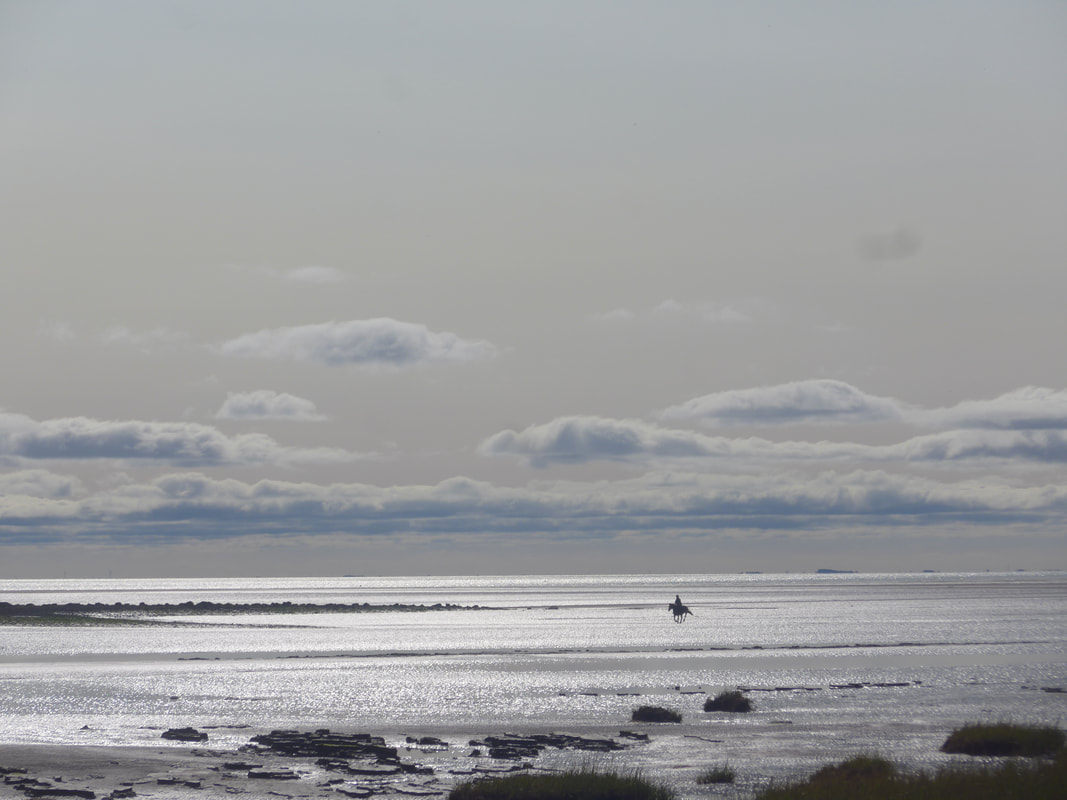
PictureSilver Rider
At Moat Farm you need to cut in to go round the farmhouse and outbuildings. For us it was also necessary because the tide had come in and the water was now lapping on the shore. The farm itself surrounds a rectilinear moat, thought to be the site of the original 13th-century manor hall. Immediately on the shore by the farm there is a sign saying the route through the farm is not a public right of way. However, the farm operates a small cafe / take-away (Wed to Sun) on the other side of the house and you can use this as the excuse to go through. We did and also stopped for coffee and snacks in the garden of the farmhouse where I enjoyed the best cheese burger I think I have ever eaten.

Moat Farm & Shoreline
PictureBreeding Dragonflies
Leaving the farm you go on to the busy A5087 for about one hundred yards before going in to the field on your left to go up the hill to access the coast again. Initially on the wing and then on the hedgerow, we were fascinated by a pair of breeding Dragonflies, although they were completely oblivious to our presence.

Back on the coast, the light show continued and we enjoyed further lovely views before we reached the start of the road section at Newbiggin, leading down to the Point at Rampside and our final section up to Roose Railway Station.

Above Moat Farm
Over Roosebeck
Approaching Rampside
Although we were walking on the road, the mixture of verge and pavement was wide enough for us not to feel too uncomfortable about the traffic. Nice views continued with in the middle distance Foulney and Piel Islands nestling off the tip of the mainland and, the bottom of Walney Island peeking round the corner. On the shore at Rampside is the Rampside Lighthouse, also known as "The Needle", which was the leading light (navigation beacon) on the local navigation system.

Picture
'The Needle', Leading Light at Rampside
There is not a lot to be said about the actual walk from Rampside. We decided to take the route through the fairly new country park. While work has been done to try to create a country park feel and, there is a kind of rural feel to it with grazing sheep and cattle, it needs time yet to mature and acquire interest. After the park the coastal route goes through a heavily industrialised area until you come to Roosegate, at which point you enter the docks area. We turned off before this however, just after the power station, to finish at Roose railway station which made it easier for us to make our way back to Ulverston.
Rounding Roosecote Sands
While the road walk and the route through Roose was not the best end to the day, it could not take away from the magical views we had experienced earlier in the walk. The sunlit seascapes of Morecambe Bay will stay with me and Joanna Elizabeth and, I suspect, will be one of the lasting memories of walking the coast of Great Britain.
0 Comments

Day 9 - Ulverston to Barrow-in-Furness - 14 Miles

20/9/2020

0 Comments

 
0 Comments

Day 8 - Cark-in-Cartmell to Ulverston 13 miles

19/9/2020

0 Comments

 
Picture
Route Map
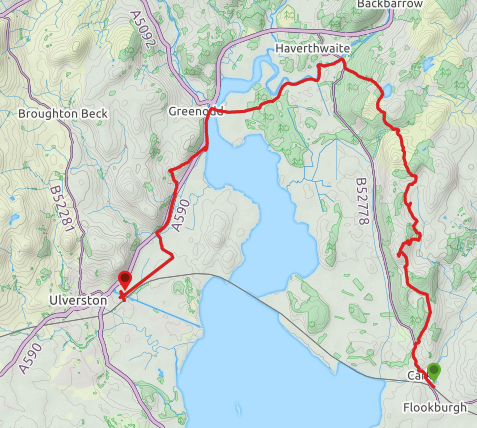
We are making use of the trains on this adventure meaning that we do not need to move so often as we move forward. Yesterday, after seven days, we left our base at the Mill at Condor-on-the-Green and moved to a hotel on Ulverston canal after having walked to Cark from Grange-over-Sands. Today's adventure starts with the train from Ulverston back to Cark before commencing the walk back to Ulverston over the hills above Morecambe Bay. We had considered trying to find a route through the Holker Hall Estate for a more direct approach to the Greenod Bridge but decided it trepassed too much on private land.

Picture
Speed, distance & altitude
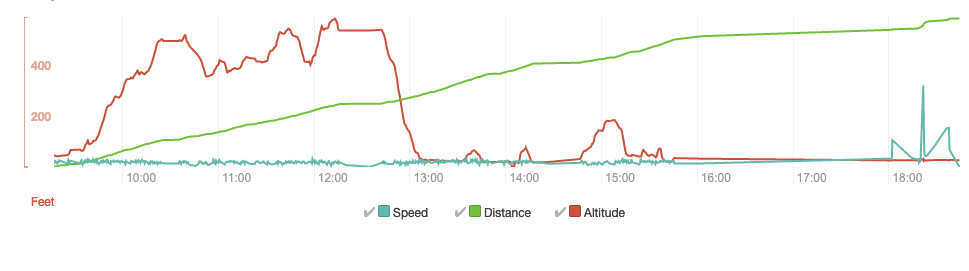
The early part of the day has a bit of climbing in it as we take the to hills and crossover Howbarrow (170 metres), Speel Bank (160 metres) and Bigland Tarn (trig point at 205 metres). The path drops down to sea level to go along the River Leven and, if you take the Arrad Hill route to Gawith Field, it rises to 150 metres.  Once off the hill it a fairly level walk in to Ulverston.
PictureView over Cark village
Parking the car at Cark Station, we walked out on the B5278 to just past Holker Hall. The plan was to learn from Dr Jean Livingston and to take the high route to Birk Dault, walk down and cross the River Leven at Greenod Bridge and find a way from there to Ulverston. By taking the high road we added some miles to the day but avoided walking along a very busy road. As well, we were swayed by Jean's description of the walk and looked forward to the views over Morecambe Bay so eloquently described by her.

Cark Village
Morecambe Bay
Way ahead!
PictureView from Mount Barnard
Passing the imposing gates to the Hall, we took the small local road on the right up towards High Bank Side. At the top, by the farm gate, the road splits with the route to the hillside directly in front of you through the gate. It takes a turn to the left at the end of the line of trees that you see in the photograph, heading up Mount Barnard. There is a another 'Y' junction slightly further on of which you take the left-hand fork to go to go up Mount Barnard and on to Howbarrow.

The more height we gained on the slopes of Mount Barnard, the more the panorama of Morecambe Bay was revealed to us. At first it was in small tantalising glimpses, then as we breached the summit the bay opened out in all its glory.

Gradations of a View
PictureHowbarrow
From the local road the route moved along a series of tracks and paths to eventually climb up to Howbarrow (170 metres; over 550 feet), from where we had stunning views out and over Cartmel Sands to Morecambe Bay and over the water to Ulverston Sands beyond. Before the main feast, however, there was a delightful walk across the lower hills offering lovely views inland, as well as across and up Morecambe Bay. At the the eastern end of the bay we could see over to the high peaks of The Tiggs, and on the opposite side of the bay we could see over to the Furness Fells.

Head of Morecambe Bay
We stopped at the top of Howbarrow to sit by the trig point and just to take in the majesty of the view. We were lucky to have such a fine clear morning for the walk. The slightly chill morning added to the clarity of the light, opening up the vista for miles around. Despite the slightly cold wind on the summit, it was a delight to sit in the early morning, listen to the birdsong and to just enjoy the moment. This is lovely fell walking and, when you could pull your eyes away from the coastal panorama, there were equally nice views inland over the moorland as far as the Newton Fell.
PictureStile to Speel Bank
Coming off Howbarrow  we dropped down at an angle to Burns Farm. We had to clamber over a wall with a fence on the top on the way and when we reached the yard at the back of the farm we had an encounter with a angry milch cow serving three calves. She looked decidedly unfriendly and stood at the farm gate bellowing at us.  We decided to give the cow a wide berth which meant dropping down the hill a measure before a bit of ungentlemanly and unlady-like scrambling over walls and fences to get back on route. The path zig-zags through the farmyard, eventually cutting down to the right to meet up with a cross-country section to Speel Bank.

Burns Farm to Speel Bank
Picture
From high up on the Speel Bank there a tantalising glimpses over the moor and through to the bay, the grey waters sparkling in the distance. On a distant hill on the other side of the bay above Ullverston the white Hoad Monument glints in the sunshine. Behind it the Cumbrian Fells are stark against the sky. This is rough pasture land, populated by sheep and divided by attractive dry-stane dykes that climb effortlessly up and down the steep braes. The landscape is punctuated by large tumbles of grey rock. It is, I think, a very English landscape. It is occasionally softened by stands of ancient broad-leaved trees; made harsh and lonely by groups of three or four possible Douglas fir trees, standing tall on small mounds and hillocks, brave in the face of the wind. On Striber's Allotment, just before the descent to Grassgarth, we pass a small lake, one of many in the area; a remnant from the passing of the glacial period which helped to shape the land hereabouts.

The colour of the landscape is harsher than we had grown used to on the shore, primary colours rather than the soft pastels of the bay shoreline. The rough pasture veers between the emerald green of the common grasses to the reds, pinks and browns of the fading shrubs, bushes and ferns. The trees provide a deeper green background against the sky which, today at least, is a deep, almost cloudless blue. It is a day to sing and swing your knapsack, revelling in the space of the high pastures and freedom from the clutches of time.

Speel Bank to Grassgarth & Bigland Tarn
PictureBigland Tarn
From the Speel Bank there is a drop down to the farm at Grassgarth. Coming on to a minor road, turning to the right at the road end, another zig-zag takes you through the farm buildings to a cut on the left to begin the second climb of the day up to the Grassgarth Heights and Bigland Tarn. At the tarn we stopped for lunch, brewing up by the lakeside and then lying back in the sun. It is a very quiet and peaceful spot, albeit popular with walkers. After lunch, we continued our descent, dropping back down the hill to Birk Dault and from there on to the banks of the River Leven.

Bigland Tarn to River Leven
Picture
There are two main routes coming off the hill. One goes round to and round the head of the lake before heading down to the road. The other leaves the lake half way along the northern edge and drops down to Birk Dault, leaving a short walk along the road to the Leven Bridge. For coastal walkers, you do not cross the bridge when you reach it but follow the road on the left of the bridge to go down the side of the river. From the Leven Bridge to the Greenod Bridge is about five kilometres, time to relax in to it and enjoy the flat terrain after the hillside.

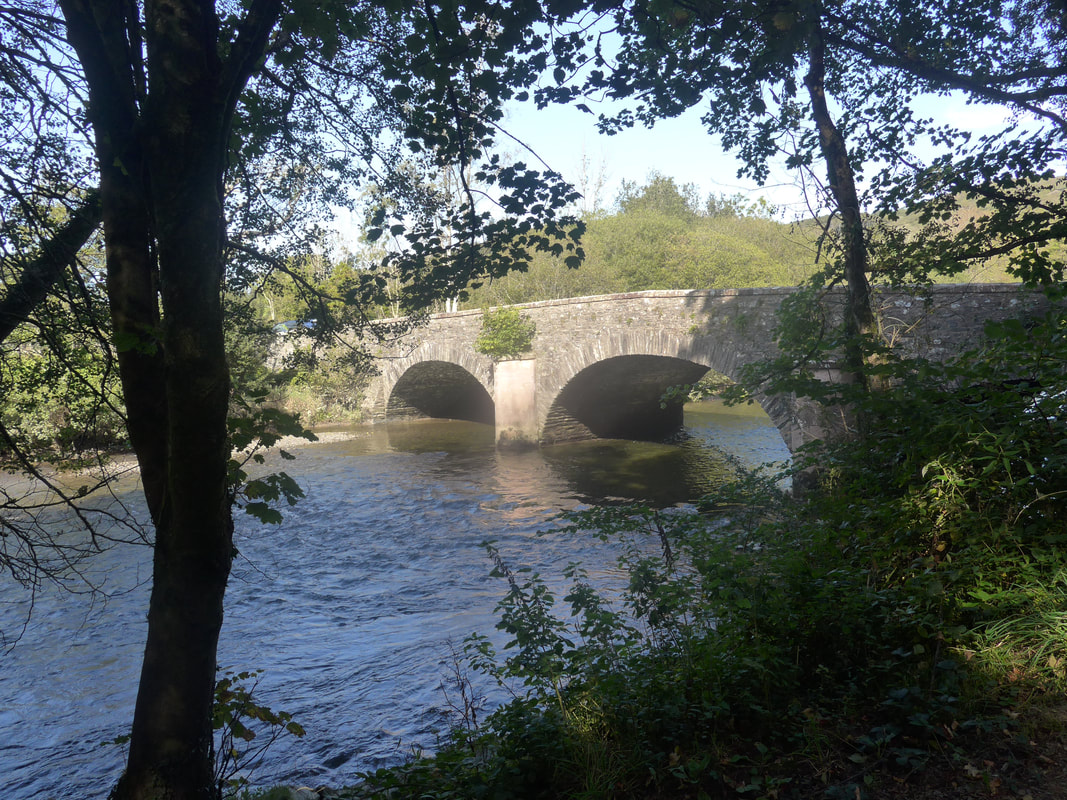
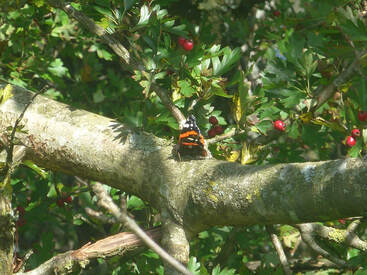
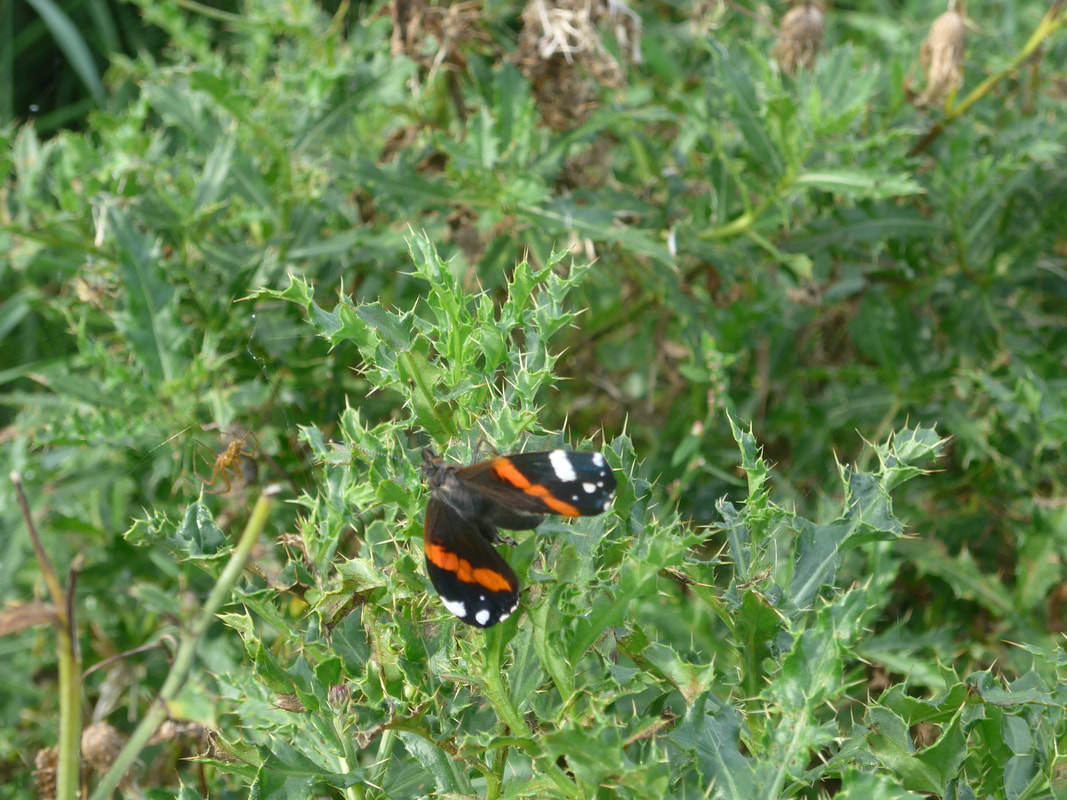
The early part of this section is close to the river, weaving in and out on a sometimes muddy and wet path. We found there were lots of Red Admiral Butterflies sunbathing on the trees. Once you come away from the river and on to the hard tramac path it becomes a little bit boring, albeit there are views over to the Cumbrian Fells. The second failure of our day occurred at the end of this section, after crossing the Greenod Bridge. We had hoped to follow a disused railway line from Greenod into Ulverston via Moss Nook. However, we were advised by fishermen on the bank that it ran through a builder's yard that would be closed as it was the weekend.

PictureGreenod Bridge
Despite the advice, we were still tempted but when we inspected the route high tide had resulted in lots of surface water that we did not fancy wading through. Instead, and to avoid walking on the busy road, we crossed over the main drag to take a local right of way that goes up Arrad Hill to the hamlet of Gawith Field, back down to Arrad Foot, hoping to then go back up past Crag. However, just along from the Foot, we were met with a padlocked gate, barb wire and the ubiquitous "Private: No Tresspassing" notice. We had no option but to return to the main road (A590) where we were fortunate to have a fairly wide green grass verge until we could turn off on to smaller, less used roads after about a mile.

River Leven at Greenod
From Newland Green where we turned off the A590, until going in to Ulverston town at Oubis Hill, we did not see a single car and only passed two other walkers. The final section going in to town was on the main road but by then there was a good pavement. On the way we stopped at the local high-end store, Booths, to buy some goodies (wonderful white chocolate 'rocky road') to keep us going until we met with local relatives later at night for a meal.

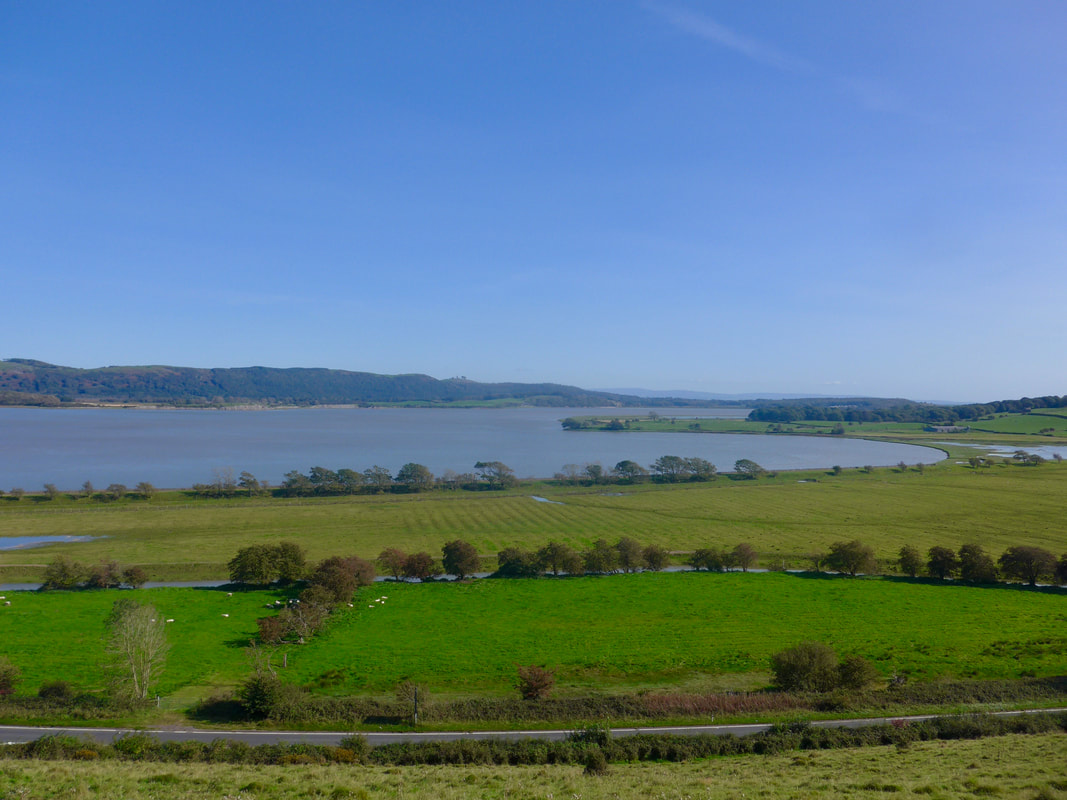
While it was a disappointment not to be able to take our choosen route through Hoker Hall Estate, the views from above the estuary made it more than worthwhile. That it was another day of beautiful weather also helped to make what turned in to a long day very enjoyable.
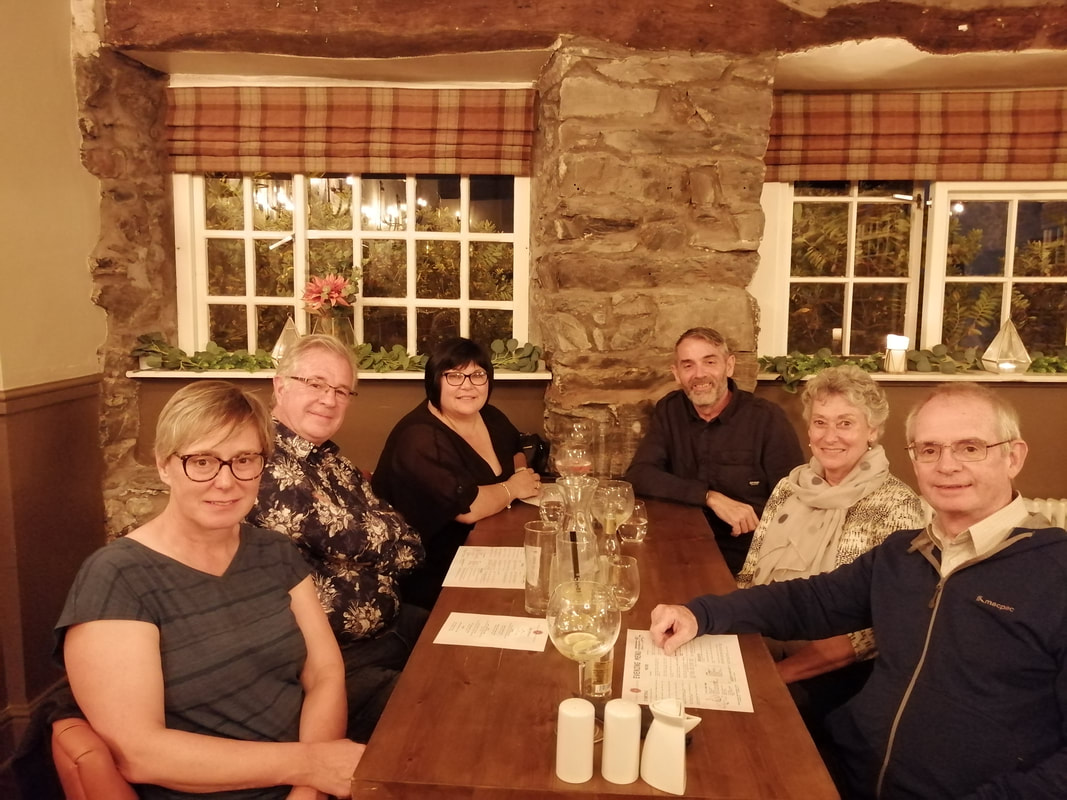
Relatives Rogues Gallery
Picture
0 Comments

Day 7 - Silverdale to Cark-&-Cartmel 12 Miles

18/9/2020

0 Comments

 
Picture
Route Map
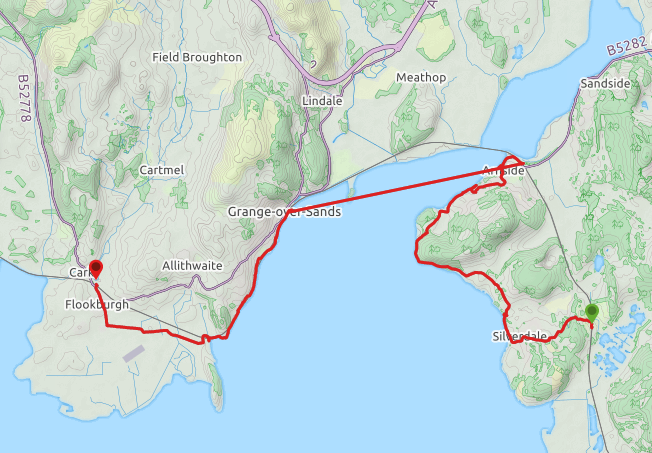
The original plan for this section would have seen us walking over Morecambe Sands with the Queen's Guide on 12 September 2020. Following changes to the Covid status in England, however, the walk was cancelled. Not too big a disaster because it is a walk I have already completed with the previous guide, Cedric, so no real need to do it again. The consequences for this trip meant that we split today in to two parts: Silverdale to Arnside; train to Grange-over-Sands and then a walk from Grange to Cark & Cartmel.
Picture
Speed, distance & altitude
PictureSilverdale Golf Course
For the past week we have been based in a hotel at Condor Green as I walked from Lytham to Silverdale. We changed location today, driving from Condor to Cark & Cartmel railway station where we parked the car and took the train back to Silverdale Railway Station where I had finished up yesterday. The plan today is to walk back to Cartmel, pick up the car and drive to our next hotel at Ulverston. We will use the train this week to reach start and finish lines of our next three walks before our next move to Millom and thereafter Whitehaven.

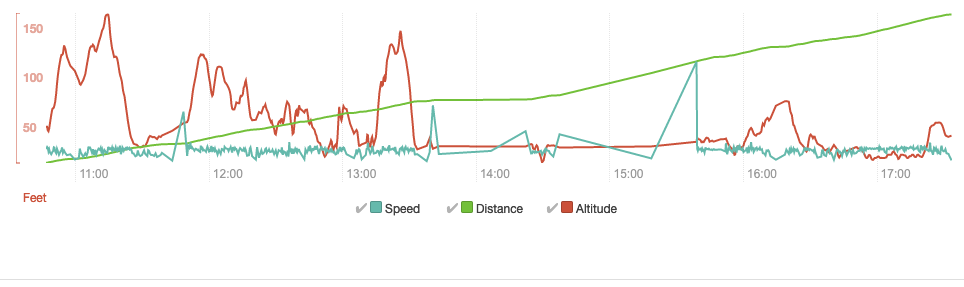
Today is another day of mixed terrain as we move between woodland, coastal path and secondary roads. At the beginning of the walk at Silverdale Station, there is an up-and-over the hill at Burton Well Woods, above Silverdale Golf Course, to return to the coastal path. It is reasonably level through the village of Silverdale, albeit rising as you approach Arnside Park.

Picture
The walk round the edge of the Arside Park rises and falls, coming to its full height of just over one hundred and thirty feet at the edge of Dobshall Woods. From Grange Sands on the other side of the bay, it is fairly level walking , initially on a promenade, until you approach Kent Bank where there is a small rise to over seventy feet before returning to sea level. From Kent's Bank no path is shown but we will have a look and see what transpires.

The weather forecast was fair and we looked forward to some nice walking. The tide plays a part in this walk as there are sections at Silverdale, going round Arnside Park and just beyond Kent's Bank that can be under water at high tide or very wet as the tide recedes.

PictureSilverdale Golf Course
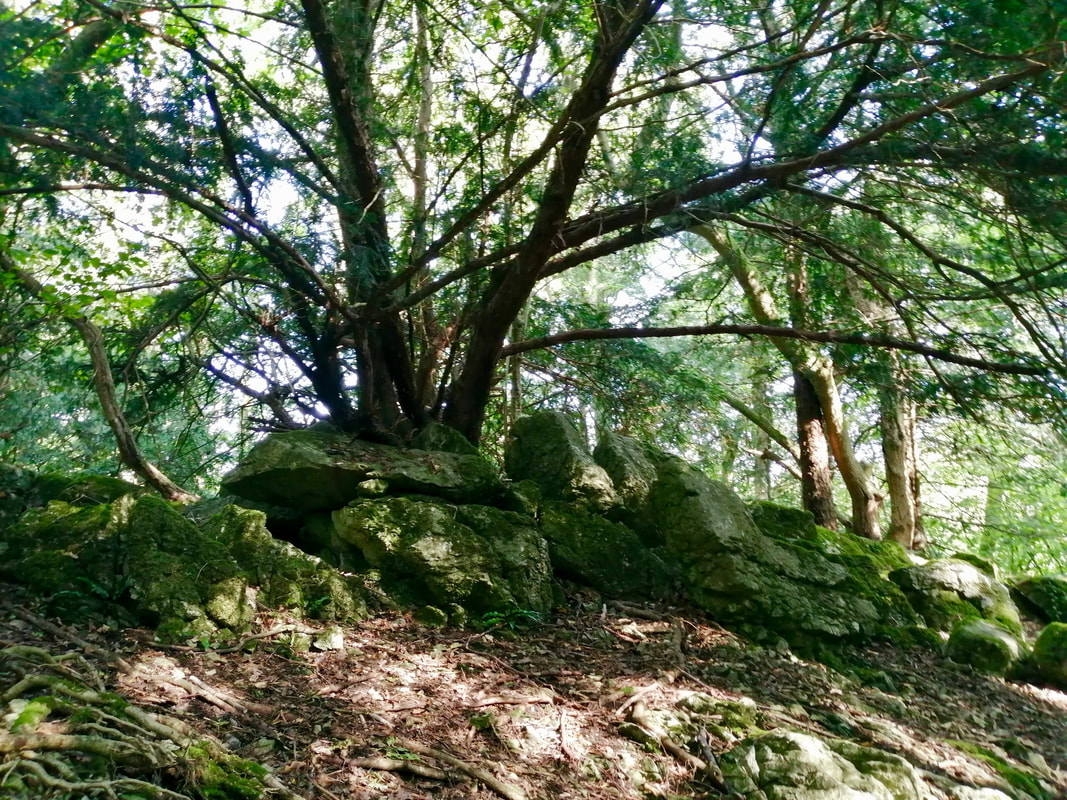
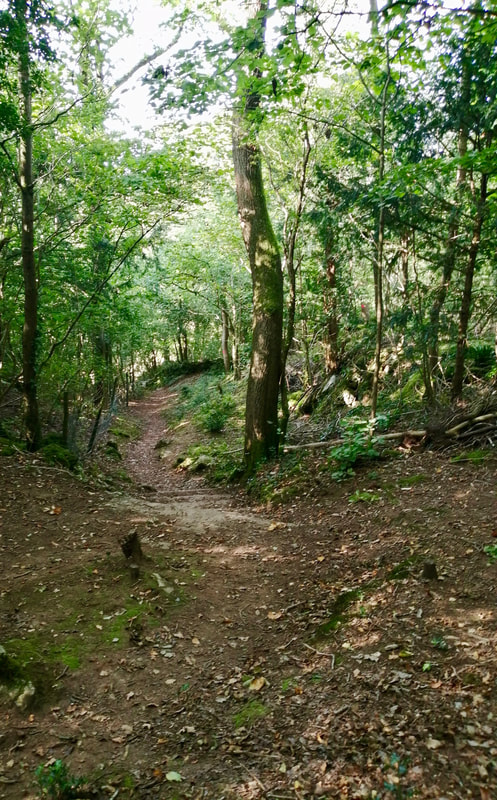
Returning to Silverdale Station from Cark with Joanna Elizabeth, from where we crossed over the golf course where I had lunched yesterday and then enjoyed a nice, shaded woodland walk to return to the shore below the village of Silverdale. It is a lovely walk through very old woods of mixed deciduous trees and there are interesting features where the roots of ancient trees and underlying metamorphic rock have been exposed.

Many of the surfaces in the woods, rocks, pavement stone and trees are covered in lichen, moss or algae. The rock moss a verdant green against the silver grey of the tree lichen. Where rivulets of water run down the paths the surfaces are covered in algae that in places was very slippy. Common fern, 'tongue' fern and ivy grow all through the woods. There is a lovely 'ancient' air to the place and I kept expecting to bump in to Ents.

Burton Hill Woods
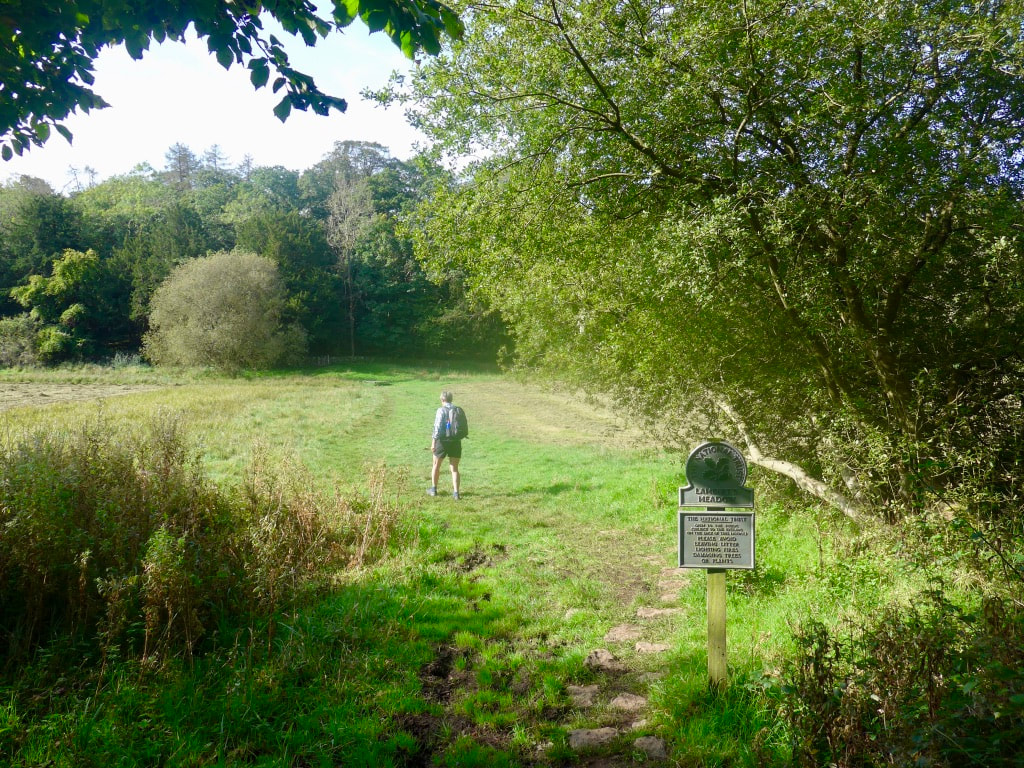
PictureLambert's Meadow
The route passes up and over one hill and then down to the National Trust's Lambert's Meadow. While the woods were a little muddy in parts, the meadow was definitely 'wet' and care required to avoid deeper boggy sections. I imagine in springtime the meadow would be a riot of colour.

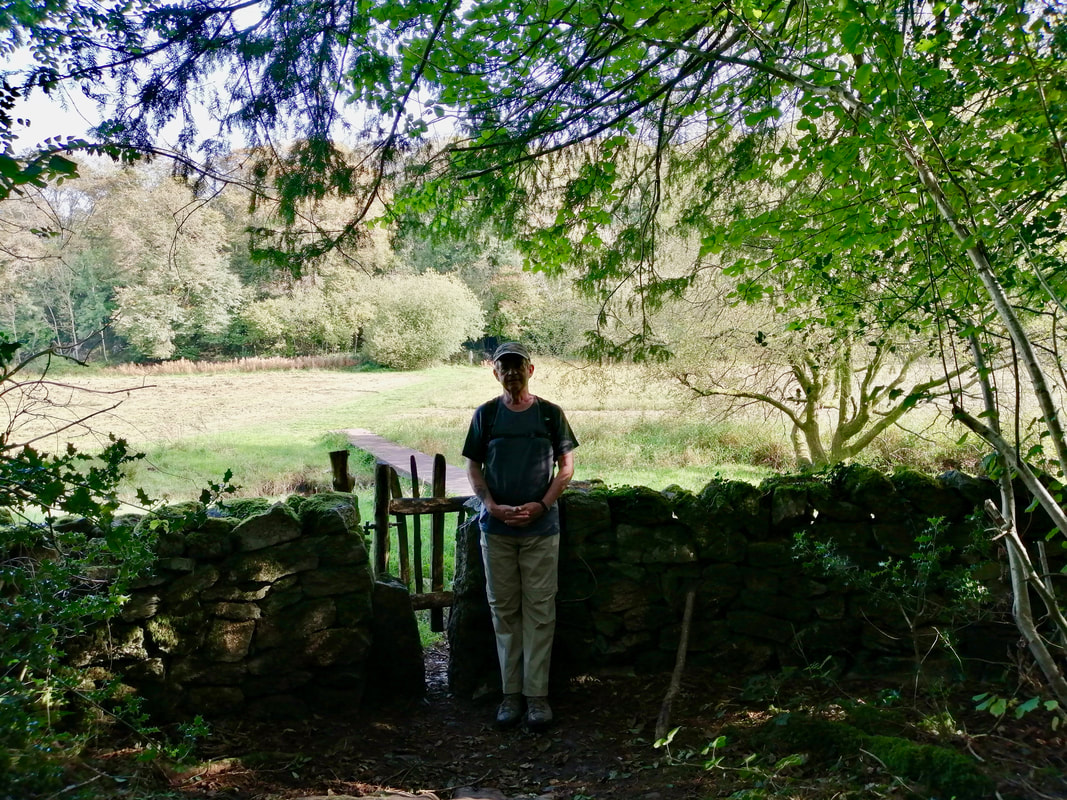
There is a small water rill running through the meadow over which there is a little footbridge. After crossing the meadow the path goes up another hilly section of Burton Well Woods, before coming out on to minor road at Bottom's Farm where you exit by going up the side of a building, not immediately obvious.

Burton Hill Woods II
PictureSilverdale to Grange & Cark
From Bottom's Farm it is a downhill road- walk through a housing scheme to the shore. Once back on the shore at  Know Hill, we slowly made our way round the coastal edge, heading for Arnside. We stayed down on the shore, albeit at times a muddy experience, the consequences of the previous high tide still evident in the surface water. If the tide has just gone out I would recommend taking one of the paths on the hill. The shore was busy, particularly with young familes investigating the rock pools left behind by the tide. It should have clicked with us at this point that it would be a wet experience as nearly all the familes and dog walkers were clad in welly boots.

Shore:  Silverdale to Far Arnside
Picture
At the end of the shore section the route moves slightly inland to move across open ground above a holiday centre. There are lovely views across Morecambe Bay from here and a  sense of open space.

At the end of the 'green' section the path moves back to the shoreline and another nice  walk around the edge of Arnside Park on a lsightly raised path.There are bits of this section where you are walking very close to the path edge and if wet it could be, I imagine, a bit 'roughty toughty'. We stayed on the outer edge path round Arnside Park and through Frith Woods to exit at New Barns and the beginning of Grubbins Wood. Off the park lies the Leighton Moss Nature Reserve and Grubbins Wood is a reserve managed by Cumbria Wildlife Trust. There is a lovely selection of trees here including yew, oak, ash, birch and lime.

PictureKent Viaduct at Arnside
Exiting the park on to the shore we could see that tide was near full again and at Grubbins Wood we were finally stopped on the shore by the high and rising water level. We could have waited an hour for the waters to abate but we were hoping to catch a 1.30pm train and opted to go through the housing estate and over the hill.

We still missed the train. But there was a benefit as where we came in to Arnside there was a very nice pie shop and as everyone knows I like nothing better than a nice savoury pie. With our chosen delicacies we sat in the sun above the shore and enjoyed a quiet lunch.

Grubbins Woods
We took the next train at the back of 3.00pm to Grange-over-Sands. Even the tinted glass windows of the train could not detract from the views over Morecambe Bay. If anything, it added layers to the light effects on the water, highlighting the 'silver darling' effect of the water's surface. 

From Kent Viaduct
PictureSaltmarsh Lamb
From outside Grange railway station a promenade runs straight through to Kents Bank, bordered on the seward side by a broad expanse of salt marsh. Salt marsh lamb is a local delicacy and crossing on the train we could see flocks of sheep grazing on the marsh. The locals have obviously spent a lot of time improving the promenade area and there were numerous flowers baskets and small garden areas along the route.

At Kents Bank no route is shown on the OS 1:50. Rather it appears as if the only route is to turn inland for a long road walk to Cark & Cartmel. However,  we were able to maintain our position on the shore almost until we reached Flookburgh, made possible by speaking to a local man at Kent Bank railway station who guided us to the far gable-end of the railway station and directed us on to a thin concrete bank that runs along the edge of the marsh on one side and the railway line on the other. It is not marked on the map and the following section after the concrete bank may not be passable at high tide.

Picture
Morecambe Bay
At Kirkhead End we had a slight diversion on to the Grange Peninsula to go round Wyke Farm, before dropping back down to join a minor road immediately after the farm. Just below the farm out on the peninsula is the location of the small Humphrey Head Activity Centre which offers adventure and exploring courses for children. There are residential facilities. From Wyke Farm it was a fairly straightforward walk on quiet roads through Flookburgh and on to Cark railway station where we had parked our car. On the way we were pleased to pass the factory that produces Cartmel Sticky Toffee Pudding, but dismayed to find it was closed.

From Cark we drove to a hotel in Ulverston, our new base for the next three days. ​All in all, a nice day's walking with some fine views and only a very limited amount of road walking, far less than we expected. On arrival in Ulverston we only have a couple of hours before we are to meet with my two cousins and their wives, one who lives locally, the other travelling over from Skipton. After a fine day's walking what better than a night out with family.

Kents Bank to Wyke Farm
0 Comments

Morecambe to Silverdale - 11 Miles

16/9/2020

0 Comments

 
Picture
Route Map
PictureEarly morning Morecambe Bay
The fifth the day of our current adventure and the sun continues to shine. Walking solo again, I continued making my way round the eastern side of Morecambe Bay. Joanna Elizabeth provided transport from Condor Green to Morecambe, walked a little way with me along the promenade before going off to spend the day with her father, Dick and our daughter, Morven. Not long after Joanna Elizabeth left me I cunningly stopped at little breakfast bistro for some sustenance, thinking I had pulled a fast one. Unbeknownst to me, JE was doing the same at the other end of the promenade!

PictureTo Grange-over-Sands
The walking terrain today is mixed with a section of promenade still to finish off, before cutting across country at the back of the beaches that make up Warton Sands. The route is very flat to just after Carnforth where I will take the path that goes up and over Warton Crag, reaching sixty metres at its highest point. Taking this minor road will take me off the busy road that runs from Carnforth to Silverdale. Coming off the crag there is a road walk to the train station at Silverdale. The weather forecast is good and I expect to walk in heat for most of the day.

Picture
Speed, distance & altitude
PictureMorecambe Promenade
Arriving in Morecambe the view  across the bay to the hills of the Furness Peninsula and the Lake District Fells was remarkably clear and in contrast to the last couple of days when their clarity was only a suggestion, shrouded by haze.

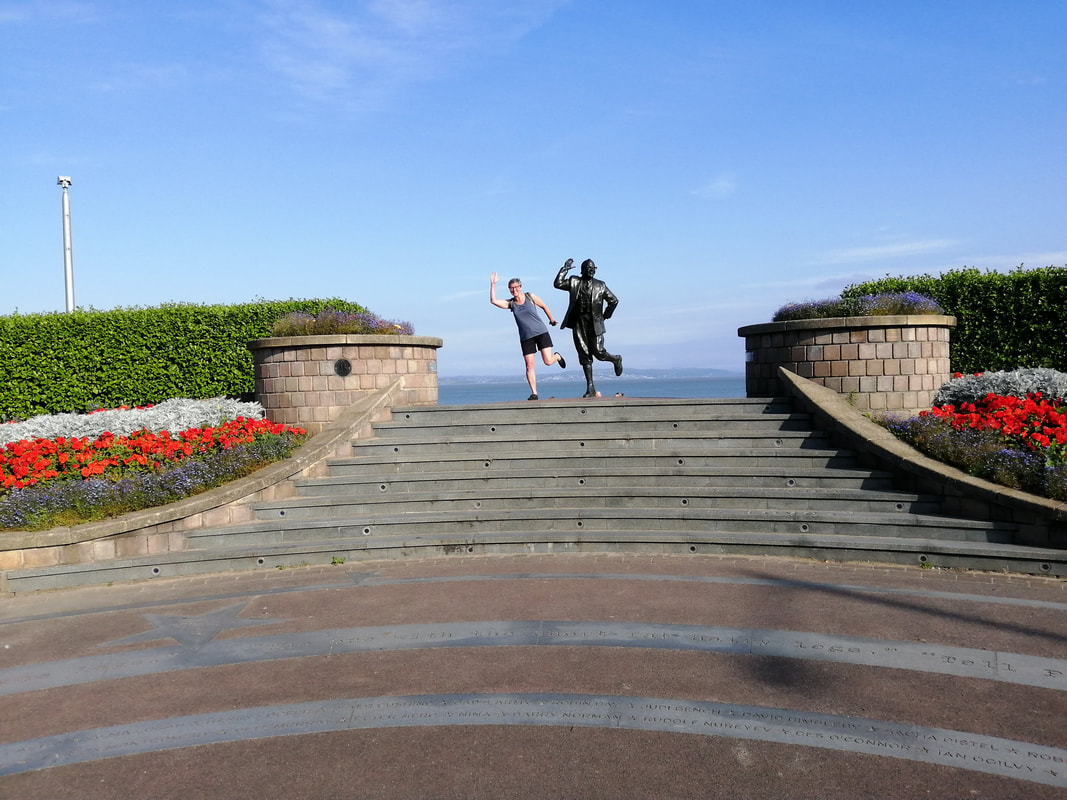
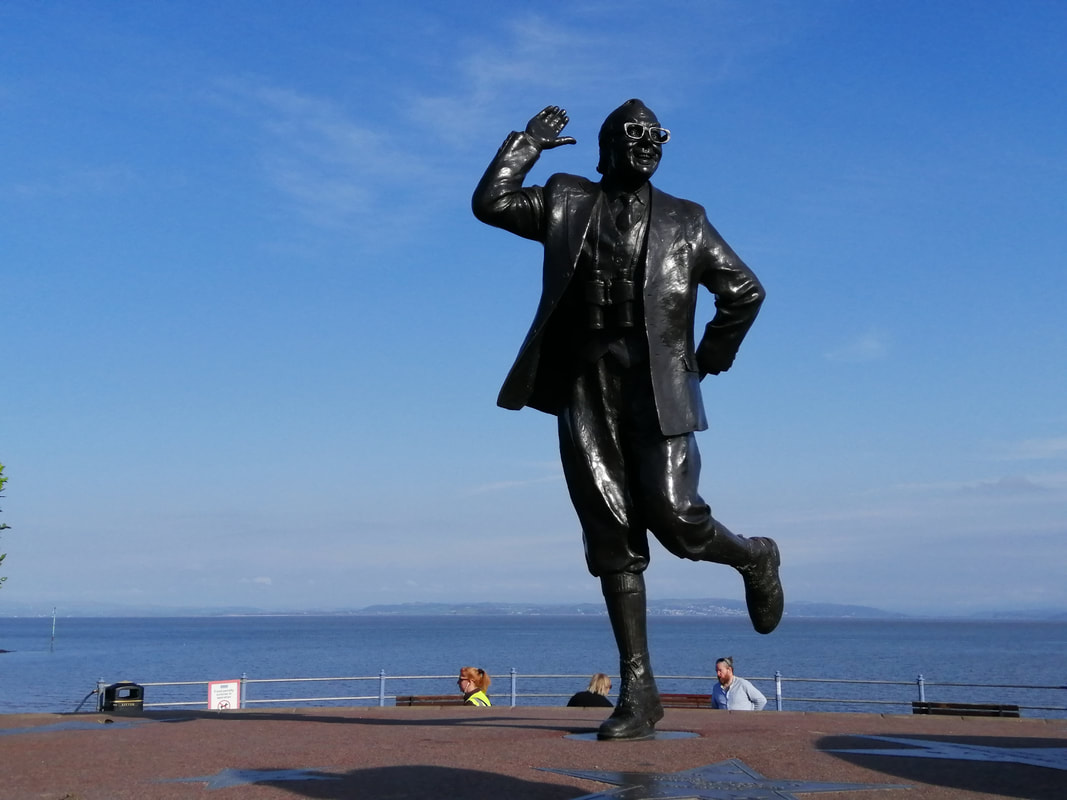
Setting off from the Stone Jetty where I had finished yesterday, there was a surprising length of promenade still to be walked, nearly two miles of it from the start point. It was nice walking in the early morning sunshine with my wife and we had a laugh when we stopped to take photographs by the Eric Morecambe statue on the sea front. After our capers we parted for the day, agreeing to meet up again at Silverdale.

Picture
Looking to Ulverston
PictureTo Grange-over-Sands
As you walk the promenade, on a fine day like today, there are splendid views across the water with the white houses at the village of Grange-over-Sands and, slightly further round, the town of Ulverston shining on the horizon. Towards the head of the bay Hunting Hill and to the left of it, Warton Crag, reach up to the clouds. On the eastern side of Warton, the white cliff face flashed like a navigation light.

When you finally leave the promenade, just before Hest Bank and by the Morecambe Golf Club, there is a slightly tricky pebble / rock beach to be negotiated before the walk and the views really open up. The tide was coming in so Warton Sands was under water and I needed to walk at the back of the beach. Still, with clear blue skies and an uninterrupted view up and down the bay there was a real sense of spaciousness to the seascape.

Picture
Hest Bank
Furness Peninsula
Hunting Hill & Warton Crag
PictureBack to Morecambe
The land and seascape surrounding Morecambe Bay can be breathtaking. All the distant features of the walk: the low rises to the west, the flatlands to the rear, the rising hills and mountains of the Lake District, all combine to provide a constantly changing feast.

The smallest change in light levels, the differing angles of the light as it strikes the water,  the sun moving across the sky, the changing textures as the tide rises and recedes covering or exposing rock and sand, the coming and going of banks of mist and haze, change fundamentally what you see. Blink and it changes.

On a day like today with relatively calm water, only the smallest ripple visible on the surface as a light breeze drifts over the waves, the land and seascape of the bay rises in layers of light and pastel colour, the edges of the layers running in to one another such that it can be difficult to discern sea from land from sky. Because it is essentially flat, the walking is not arduous and lends itself to a leisurely pace. Walking solo, the lap of the water, the hum and drone of bees working the verges, warmth on your face, the light sough of the breeze in your inner ear, lend a somambulant air to the activity. Dreamwalking, I think you could call it.

PictureTo Wild Duck Hall
Approaching the start of the Morecambe Bay Nature Reserve there is a cafe and farm shop at Red Bank Farm. I had been looking forward to acquiring a nice cold drink here, but chance would have been a fine thing. The place was swarming with people with the same idea as myself. Never mind the length of wait I would have had at the shop, the sheer number of people put me off and I almost ran through to get away from them.

With the tide in there was no chance of returning to the beach at this point and I believe there are a number of water features on the beach, creeks and rills, that prevent through road. Instead, I followed the Lancashire Coastal Path which turns slightly inland to Wild Duck Hall, before heading back to the coast by the Bay View Caravan Park on Bolton-le-Sands.

Just beyond Hest Bank there is a low hill to be climbed which gives the added perspective of height to the view over the bay. From the other side of the hill, where a large marsh extends in to and around the bay, at Morecambe Lodge there is a road that takes a wide swing round the outer edge of the extensive marshland. Ignoring the road, I chose instead to head off across the marsh where, apart from one of two zig-zags to go round channels and rills, it was a fairly straightforward walk. It was a walk I thoroughly enjoyed, the vastness and the emptiness of the marsh creating a sense of solitude. Further along just below Marsh House Farm, I stopped to brew up and eat some snacks, although in the heat I did not feel particularly hungry. As I sat eating lunch, my family arrived at Red Bank Farm a couple of miles behind me, hoping to meet and buy me lunch. Ca Sera!
PictureAcross the Marsh
From Bolton Holmes the path follows a route to the back of the salt marsh, heading towards the village of Carnforth. A relatively good path, a bit of care is required where you put your feet because it is a bog and there is some water around, especially after the high tide. By the water's edge there were flocks of different kinds of waders feeding in the shallows left behind by the receding tide.

The River Keer which runs out from Millhead, discharges at the bottom of a little valley,  dissecting the beach on its way to the sea and preventing further forward progress. To go round it, the path diverts up the side of the river to a bridge that crosses the river just by Hagg Wood, maybe half to three-quarters of a mile distance. I found it to be a pretty little bridge but was not so enamoured of the diversion overall.

PictureRiver Keer Footbridge
After crossing the bridge my route followed the line of the railway to a bridge over the railway to access the road leading to the village of Warton. Ignoring the first road on the left, I went down the hill, past Corfe Farm to take a lane that accesses public footpaths that cross arable fields to a very minor road on Hunting Hill. I missed the lane at first and then could not find the way through the dyke at the top of the hill. After being put right by a young lady enjoying a picnic on the hill, I was able to get on to the minor road that goes over the top of the hill and down to Crag Foot.

I could have taken the first turn off which would have been shorter, but it is a busy road with commensurate dangers. The higher road was delightful, despite the ups and down, the road passing through a heavily wooded area. I was not passed by one car the whole length of it and by only two cyclists.

Warton Crag
Upriver
Downriver
Picture
Coming off Warton Crag the path rejoins the main road where you take the second road on the left heading to the bridge over a stretch of water. If you continue to follow the Lancashire Coastal Path you turn left before the bridge, down the side of Leighton Moss and over the railway line to head for Silverdale.

Warton Crag
I was heading for Silverdale Station and so continued straight over the bridge and up to a t-junction to turn right and head for the railway station. While waiting for my family to pick me up I wandered in to Silverdale Golf Club where I thoroughly enjoyed a surprisingly good lunch in the Oak Bistro. When the family arrived we lingered longer and leisurely over ice-cold drinks and ice-cream. Nice way to end a day.
0 Comments

Glasson to Morecambe - 18 miles

15/9/2020

0 Comments

 
Picture
Route Map
It is always nice to have company on the longer trails and I was pleased my usual walking partner, Joanna Elizabeth had decided to join me. Fortunately, the good weather continued to shine on us today, albeit after a slightly cloudy start. As the morning went on, however, the sky cleared and by late morning we were walking in blistering heat.

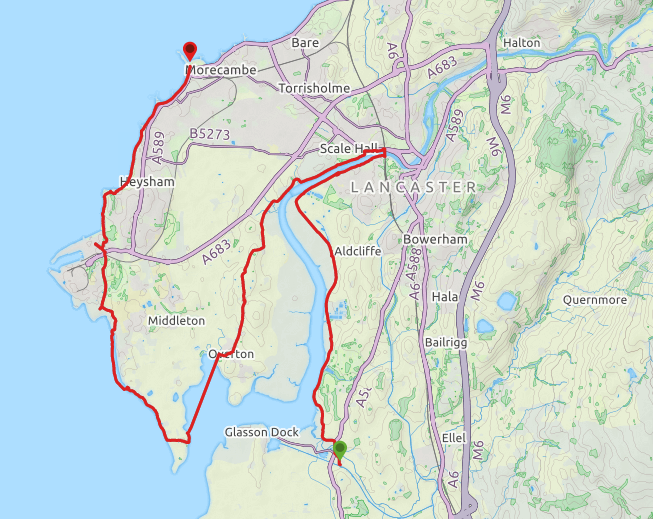
Today's route is a mixture of coastal walking and, on the approaches to the village of Overton on the west bank of the River Lune, we have a road walk to go round the Colloway Marsh, followed by beach or promenade from Heysham to Morecambe. It is a fairly level walk apart from a section on the road walk where there is a slight rise to just over twenty metres. The weather forecast had been good when we were going to bed last night and, despite a chill in the early morning air, it remained fine for most of the day. We had a short walk from our base on the Glasson branch of the Lancaster Canal to return to the Lancashire Coastal way but it was probably just less than a mile before we were back on the banks of the River Lune, just below Condor Green.

Picture
Speed, Distance, & Altitude
PictureLooking Over River Condor to River Lune
Walking initially on local roads from the hotel, we walked to the outskirts of the village and along the front of Condor Green Farm to take station on the banks of the River Lune.  It was a very pleasant and idyllic walk with just the sound of the birds and the beat of the butterfly's wings. With tide out on the river, the flow of the water was slow and patient and it was no hard task to match our pace to it for most of the morning.

PictureDown River Lune to Glasson Dock
It was a long, slow meander cross-country following the riverbank on a variety of different path surfaces. The first section from Condor Green to just below Aldcliff is on a shared hard tarmac cycle / walkway that stays back from the river. Despite this there are good views to be had on the left over the salt marsh to the River Lune. On your right you pass the Lancaster Golf Club, which is also the location of the 14th C Ashton Hall. The original hall was built in the late 14th C, with major renovations and extension work completed in the 19th C. The hall now functions as the club house for the golf course and as a wedding venue.

 The day had a kind of melancholy air to it and our walking pace reflected the slow but constant deliberateness of it. The constant need to avoid cyclists eventually led us through the hedgerow and on to a sometimes muddy path running along the edge of the marsh. Although at times untidy and a bit confused underfoot, there was more light available to us and we were rewarded with nice river views. The verges here were also populated with butterflies and on the shore we could could view the different varieties of waders on the river's edge.
By the River Lune
PictureOver the Marsh towards Lancaster
Just below the village of Aldcliffe the paths separate with the walking route going off cross-country to continue going up the river. The cycle path continues straight on following the dismantled railway line o a more direct route to the the city of Lancaster. The walking path passes to the back of Aldcliffe Marsh. The area is a well known location for bird watching on and and off the marsh with, to the right as you walk the section, a series of pools where rare bird sightings are occasionally reported. The site is managed privately by Morecambe Bay Wildfowlers Association with viewing fairly restricted to the walking or cycle pathways.

Back of Aldcliffe Marsh
PictureApproaching New Quay
As you clear the marsh area the river takes a sharp turn to the right and on to a straight run in to the city of Lancaster, passing the last of the still water pools on your right. We had a slight glitch here approaching the New Quay by the industrial area, thinking we could just climb up the side of the quay. In fact, there is no way up and you need to take a small path that goes off a hundred yards or so before you hit the quay, literally!

From New Quay it is a straight walk to the Carlisle Railway Bridge to cross over the river. Although a railway bridge, there is a pedestrian crossing attached to the far side of the bridge, accessed by going under the bridge and up a walkway. If you are interested in Roman history, go to the right and up to Castle Hill where as well as the might Medieval Lancaster Castle, there are remains of the  priory church (mostly 15th C, albeit there is thought to have been a church on the site since at least AD630). From the church there is a path leading to the site of successive Roman forts dating from about 80AD.

PicturePedestrian Crossing, Carlisle Bridge
Coming off the bridge to walk back down the river, there is a very short walk to a cut-away to access the walkway / cycle path on the riverbank. We stopped on a bench here to brew up and have a snack and just watched the water flow past.

The path continues down the river to Oxcliffe Hall (circa 1644) where it moves on to a minor road that zig-zags its way to the village of Overton. You need to take the road here because there are so many creeks and rills by the river bank, hence no through road. While you can stay on the minor road we went off on to an even smaller road hoping we could stay on it until Heaton Hall but further down the road was closed. Rejoining the minor road we walked the fairly busy road to Overton, occasionally having to take refuge on the verge from the speeding motorists.

There was a lunch disappointment going through the village of Overton when we found the two pubs had closed down; one for refurb, the other for sale. But there was good news in that the tide was low and we could take the tidal road down to the village of Sunderland and beyond that to Sunderland Point. 

River Lune & Overton Road
PictureTidal Warning - Beware!
The village of Sunderland is a tidal village in that the only access by vehicle is at low tide. From Overton there is a single-track road that is one and a half miles (2.4 km) long. The other option is to drive to Trailholme and then walk down to Sunderland. The actual walk itself was uneventful but nonetheless offered some stunning views out and across the estuary. On the sections where you can clearly see the effects of the incoming tide you are in no doubt you do not want to be caught in the middle of it. The route runs through the middle of a marsh with good views over it to the river. In the village itself you can see where individual properties have had to take action to prevent flooding. There is a public toilet on the shore front but no hostelries. We had carried lunch in with us and after a quick trip to Sunderland Point we set about brewing up, sat on the shore front and just enjoyed the view.

Sunderland Tidal Road
PictureCrossing the Neck
After lunch we set off on the last section of the day by cutting across the neck of the Sunderland Peninsula to come on to the coast of Morecambe Bay. We joined a sandy track that runs at the back of Overton Marsh up to Potts Corner. There were fine views over the marsh to the bay, while to the front of us the horizon was dominated by the buildings of the  Heysham power station. The verges of the marsh were populated that day by numerous Small Tortoiseshell butterflies that seemed to enjoy the environment of fine, silky, grey grass growing on the margins. The day had really warmed up now and we walked all afternoon in very warm sunshine.

From Potts Corner no footpath is signposted or shown on the OS 1:50. However, when we stopped at the carvan park hoping to buy cold drinks (the shop was closed), we were advised that at low tide we could go straight through on the beach. We were able to walk the Middleton Sands to the Ocean Edge caravan park by the Red Nab, where we were finally forced inland by waterways and the power plant. At Ocean Edge, as well as being able to skip through the park to Money Close Lane and a more direct route in to Heysham, we stopped at the camp shop for ice cream and cold drinks which we enjoyed sitting on a park bench.

Path by Sunderland Bank
Sunderland Marsh
Samll Tortoiseshell
PictureMorecambe Bay
Money Close Lane goes round the site of the Heysham Power Station, bringing you to the outskirts of the town by the Heysham Nature Reserve. Operated by the Wildlife Trust for Lancashire the reserve is said to be a hotspot for songbirds and waders, buterflies and dragonflies.

We cut down the side of the reserve hoping to come on to the beach by Half Moon Bay to start the long walk to the town of Morecambe, unfortunately there was no way through. Doubling back on ourselves we went down Penrod Way and followed the road through to the bay, just slightly further on than intended. The town itself looked nice and the bay, despite the looming presence of the power station, a very attractive location. With the sun dropping quickly in the sky, we were lucky to have very nice light for our walk along this bit of coast, resulting in very fine views.

Half Moon Bay
PictureApproaching Chapel Hill
At the western end of Half Moon Bay is Chapel Hill, home to the chapel of St Patrick, dated to 5th C AD and the slightly later church of St Peter's, thought to have been built about 1000 AD, although there may have been an earlier wooden structure. There is a link path that moves you from one to the other. The view from the hill is superb, looking out over Morecambe Bay, across a delicately coloured and layered land and seascape that seem to lie, one atop the other.

A well known feature at St Patrick's is the line of open stone cists, thought to have once contained bones of clerics or saints. Although now open to the elements, it is thought they would have had stone covers and the post holes at the top of the graves would probably have contained Celtic-type crucifixes.

St Peter's church is home to the a Viking hogsback grave stone, dating from about 950 AD. It was found in the churchyard in the 19th C and is now kept in the church. Sadly, when we went to see it the church was locked. Next door to St Peter's Church is the lovely Glebe Garden, a community volunteer effort. One of a range of plants in the garden is an original species of the Rose of Lancaster.

PictureBack to Chapel Hill
Moving on from St Peter's the last few miles were walked on either sand or tarmac, take your choice. The lovely views continue as you walk the promenade. The hills and valleys of the Cumbrian dales just visible across Morecambe Bay through the afternoon haze. The colour palete of the bay is very delicate, moving through shades of grey, silver, blue, yellow with occasional swatches of green where hard grasses grow. With the tide out it feels immense and the low afternoon sun gave it a sense of mystery and intrigue.

Tired now having already walked sixteen miles, the last couple of miles on the promenade seemed to stretch to infinity. We finished the walk at Stone Jetty, in the west end of the town where other family joined us for an evening meal at the Midland Hotel Rotunda, overlooking the bay and where we were treated to a beautiful sunset before moving indoors to dine.

Apart from the middle road section, this was long, lovely coastal walking, completed at leisure and in wonderful weather, finishing with an epic sunset flourish.
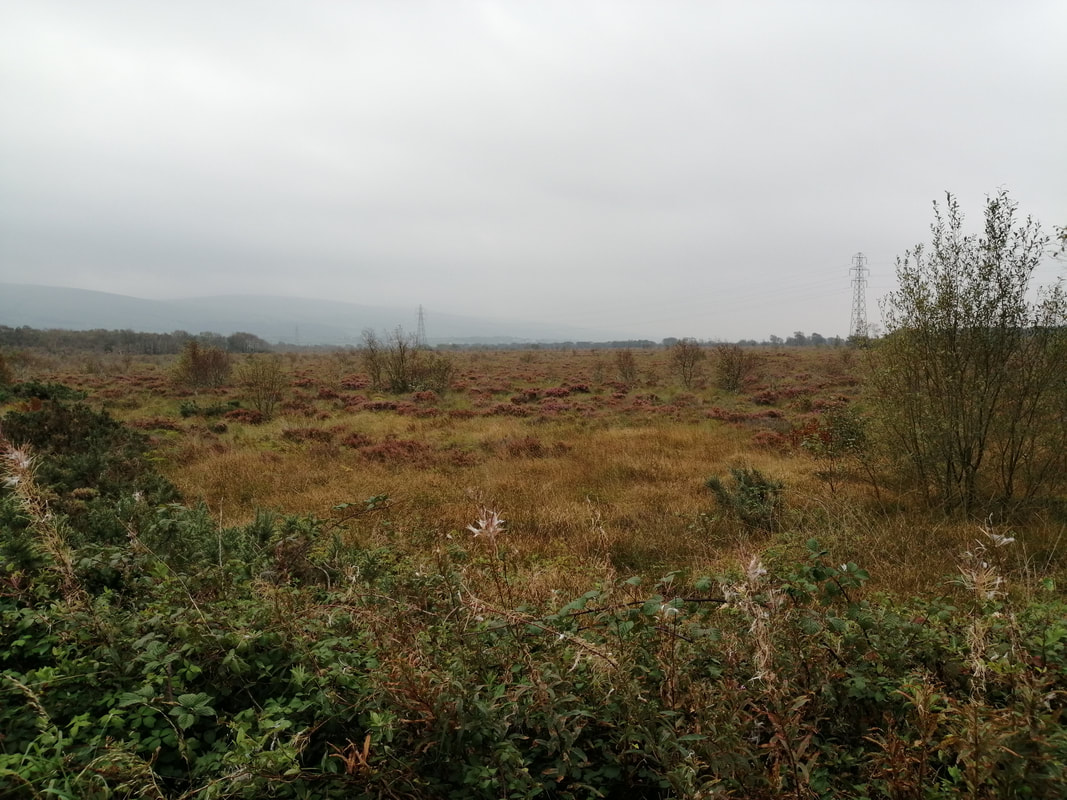
0 Comments
<<Previous

    Author

    Recently retired from a career in social work after previously working in the army and the catering industry. Educated at senior secondary school, Strathclyde University (Politics & Psychology) and Dundee University (Social Work).  I am looking forward to exploring and learning more about the places and communities that populate the coastal regions.
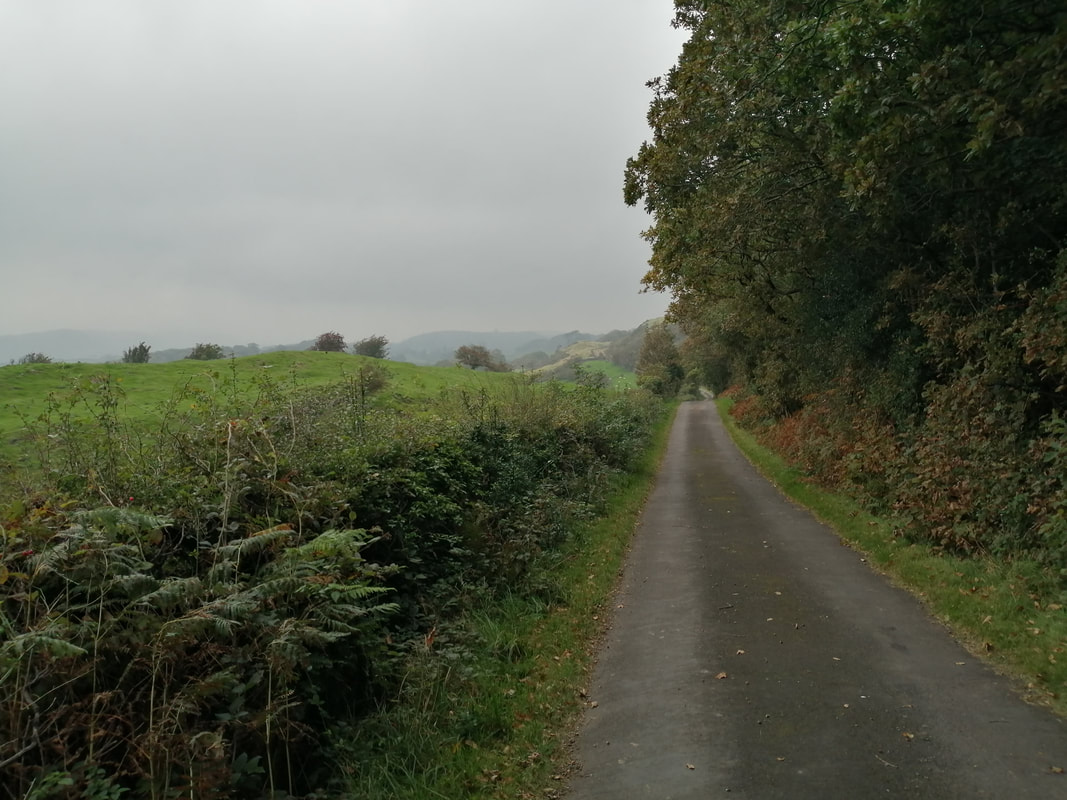
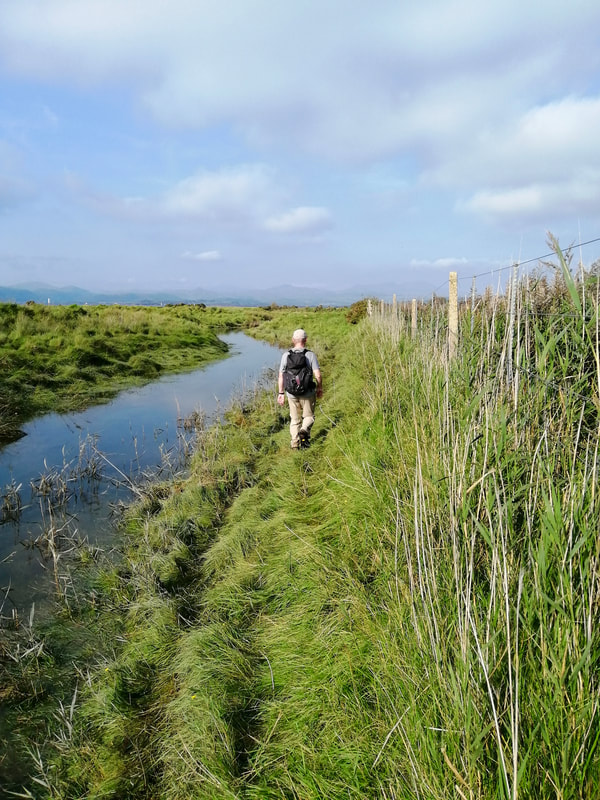
    Archives

    May 2024
    April 2024
    June 2023
    May 2023
    April 2023
    March 2023
    November 2022
    September 2022
    August 2022
    June 2022
    May 2022
    March 2022
    January 2022
    November 2021
    September 2021
    August 2021
    June 2021
    September 2020
    August 2020
    December 2019
    June 2019
    May 2019
    April 2019
    August 2018
    July 2018
    June 2018
    May 2018
    April 2018
    March 2018
    October 2017
    August 2017
    July 2017
    June 2017
    May 2017
    April 2017
    October 2016
    September 2016
    July 2016
    May 2016
    April 2016
    March 2016
    October 2015
    July 2015
    June 2015
    May 2015
    April 2015
    March 2015
    October 2014
    September 2014

    Categories

    All

    RSS Feed

Powered by Create your own unique website with customizable templates.